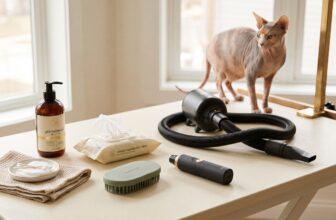
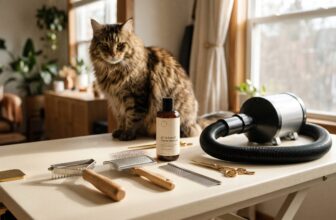
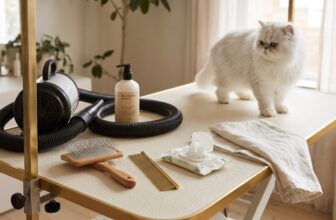
Cat hairball prevention targets delayed gastrointestinal motility and excess loose coat ingestion rather than relying on routine laxative pastes. Combining daily insoluble psyllium fiber, adequate dietary moisture, and scheduled mechanical brushing moves swallowed hair safely through the colon in stool while reserving lubricant gels strictly for acute trichobezoar evacuation.
Cat hairball prevention starts with a correction owners may not hear. A hairball is a clinical sign rather than a normal feline function, and veterinary gastroenterology classifies it as a motility-associated finding (Case et al., Canine and Feline Nutrition, 3rd ed.). When a cat grooms, the barbed papillae on its tongue pull loose hair into the mouth, and the hair is swallowed. In a cat with normal gastrointestinal motility, that hair travels the length of the tract and exits in the stool. A trichobezoar forms when hair accumulates in the stomach faster than it can be cleared, and the cat eventually vomits a compressed cylinder of it. Recurring hairballs point to slowed motility and to a diet short on fiber. This protocol dissects the mechanical and nutritional drivers behind cat hairball prevention and outlines the clinical interventions within our comprehensive feline care and health hub that address the root cause rather than the symptom.
Written by: PGA Nutrition & Dietetics Desk
Reviewed by: PGA Editorial Board (Zaheer Aujla, Head of Board) · Six editorial desks · Institutional review standard
Quick Match: Symptom to Intervention
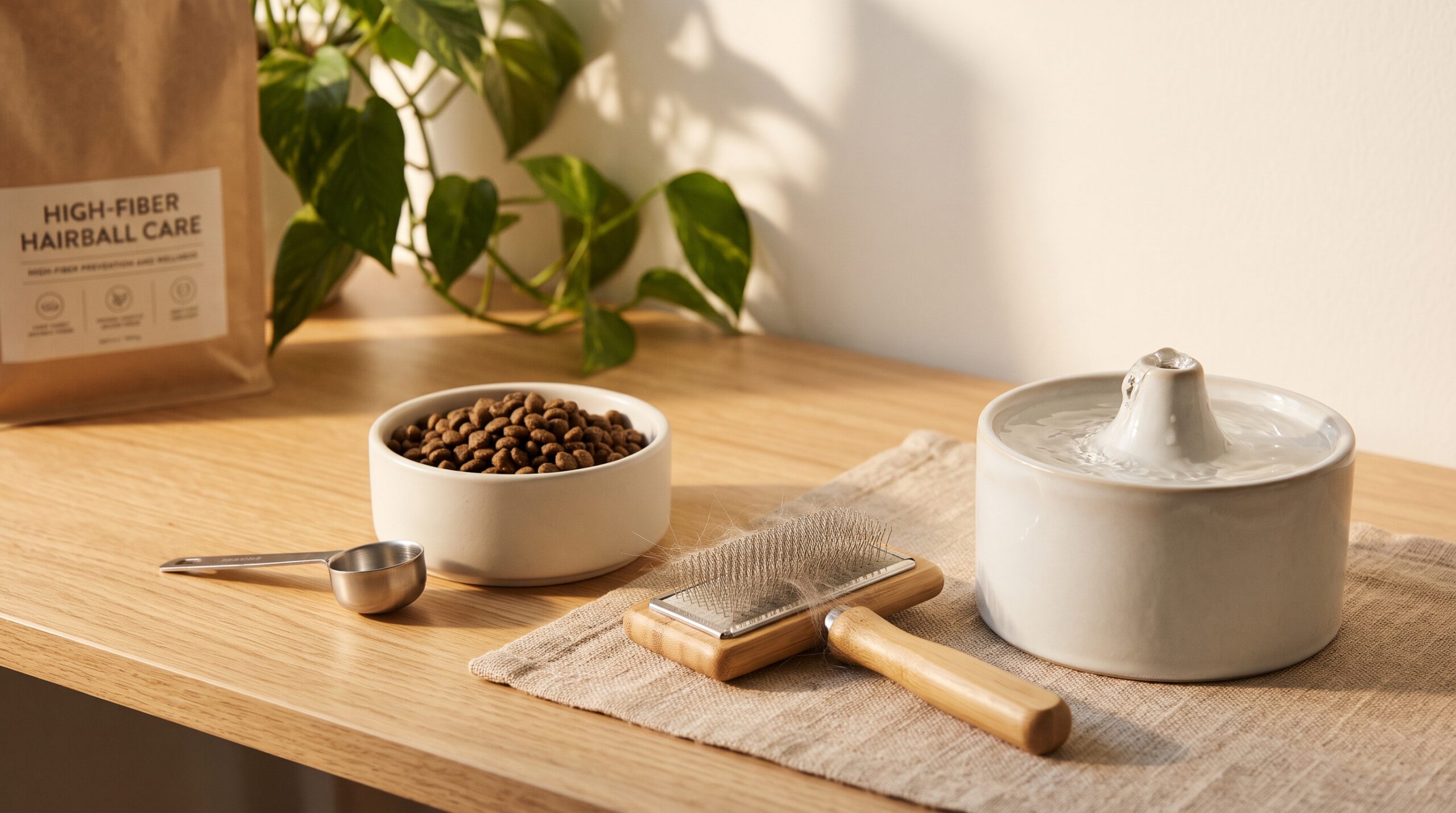
Effective hairball triage separates acute trichobezoar evacuation from daily preventive maintenance. Short-term petroleum lubricant gels coat an active hair mass to ease passage, whereas daily insoluble psyllium fiber, high-moisture rations, and consistent coat brushing accelerate colonic transit and reduce swallowed hair volume before gastric compaction occurs.
The clinically sound approach to cat hairball prevention pairs an insoluble fiber source with daily mechanical grooming and reserves lubricant gels for active trichobezoars. Insoluble fiber such as psyllium husk adds bulk to the stool and accelerates transit, which moves swallowed hair through the colon before it can compact in the stomach. Daily brushing following daily cat coat grooming standards removes loose coat hair before the cat swallows it, a mechanical intervention documented in standard veterinary grooming guidance (Case et al., 3rd ed.). Lubricant gels coat an existing hairball so it can pass, and they belong in the acute phase rather than in daily maintenance. When hairballs recur month after month, the plan needs veterinary review rather than a stronger gel.
Differential Diagnosis for Cat Hairballs
Recurring feline hairballs represent a gastrointestinal motility finding rather than a normal grooming byproduct. Differential assessment evaluates slowed gastric emptying, low dietary fiber and water intake, and stress-induced or allergic over-grooming, because chronic trichobezoar vomiting can mask underlying inflammatory bowel disease or alimentary lymphoma requiring veterinary workup.
Cat hairball prevention belongs in gastroenterology rather than in grooming. The feline gastrointestinal tract is short by design, and it evolved to move prey through at a rate that leaves little time for indigestible material to accumulate (Zoran, JAVMA, 2002). Hair is indigestible. When motility runs at its normal pace, hair travels with the rest of the ingesta and exits in the stool. When motility slows, the same hair sits in the stomach and begins to compact. Veterinary gastroenterology classifies the resulting trichobezoar as a motility-associated finding in our veterinary gastrointestinal and trichobezoar encyclopedia, and that framing changes the intervention. Recurring hairballs warrant a transit assessment rather than a stronger grooming routine.
The fiber mechanism works on both ends of the problem. Insoluble fiber such as psyllium husk and powdered cellulose absorbs water and adds bulk to the colonic contents, which stimulates peristalsis and shortens transit time (Case et al., 3rd ed.). Faster transit means less time for hair to settle. Soluble fiber ferments in the colon and supports the microbiome, and the combination appears in commercial hairball formulas because each supports a different part of the transit picture. As a practical caution, a fiber supplement fed without adequate water accomplishes less than the label promises, because psyllium expands only when moisture is available (WSAVA Global Nutrition Committee). That is why cat hairball prevention plans pair fiber with a moisture strategy rather than treating the two as separate items.
Over-grooming raises the volume of hair entering the tract and deserves its own line of inquiry. The AAFP and ISFM Environmental Needs Guidelines note that stress and environmental allergens drive compulsive licking, and a cat that grooms for hours ingests far more hair than a cat that grooms for minutes (AAFP and ISFM Environmental Needs Guidelines, 2013). Behavioral over-grooming can present as symmetric bald patches along the flanks and belly in feline dermatology practice, outlined in our stress-driven feline over-grooming protocol. Addressing the underlying trigger reduces hair intake at the source, which makes cat hairball prevention easier regardless of what the bowl contains. The cat problems library covers the behavioral side, and the cat nutrition section documents the fiber targets that support transit.
Root Cause and Intervention Ladder
Targeted nutritional formulation addresses hairball root causes across three functional tiers. Insoluble fibers such as psyllium husk and cellulose increase stool bulk to sweep hair forward, soluble prebiotic fibers nourish motility-regulating gut bacteria, and marine omega-3 fatty acids strengthen the skin barrier to curb shedding and licking.
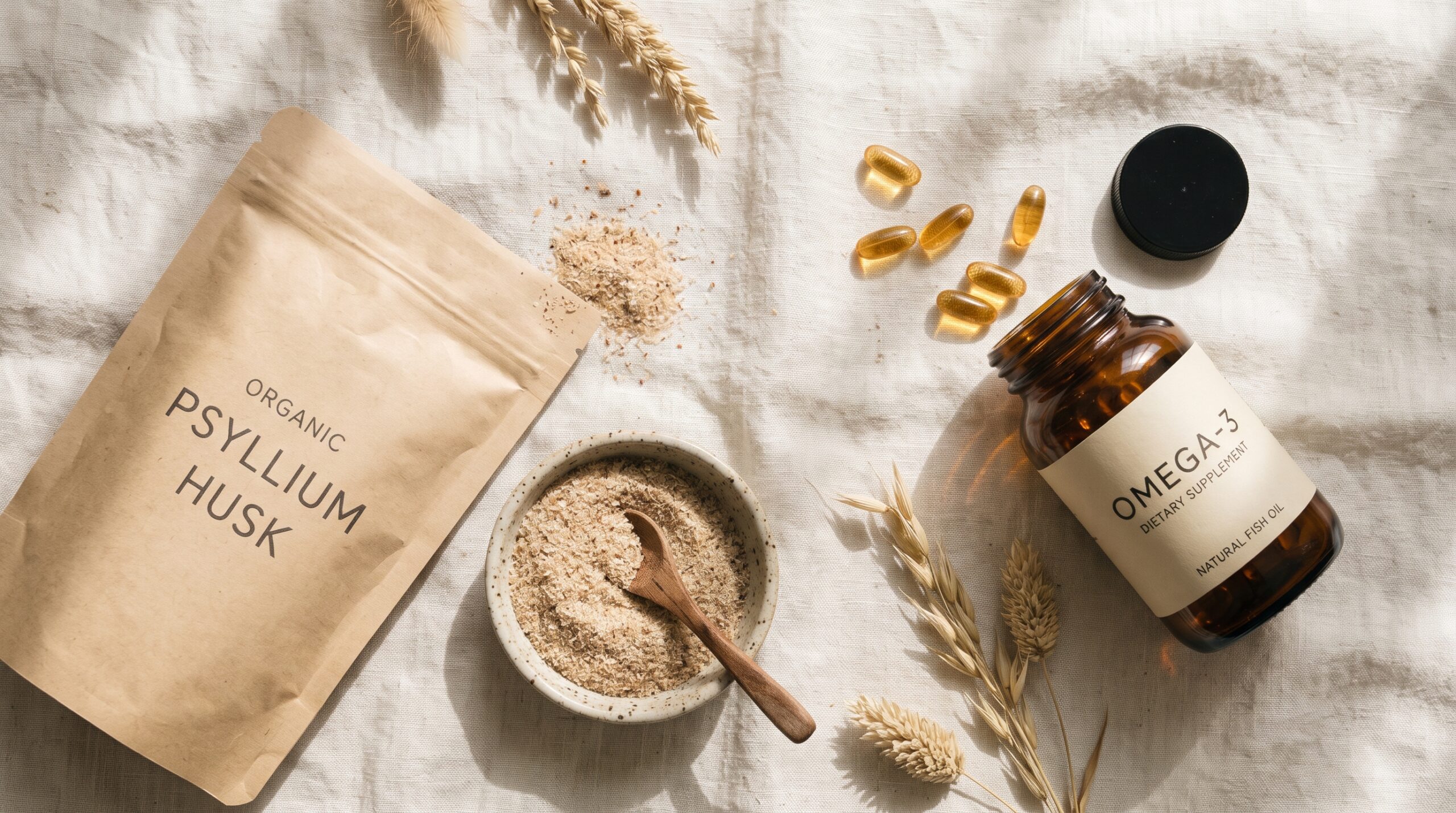
A working cat hairball prevention plan builds on three ingredient categories that each solve a different part of the transit picture. Insoluble fiber supports daily movement through bulk and peristalsis. Soluble fiber feeds the microbiome that regulates motility over time. Omega-3 fatty acids improve coat condition so less hair sheds into the tract in the first place. Read a product label or compare veterinary dietary fiber and oil supplements against those categories and the marketing claims sort themselves out quickly.
3.1 Insoluble Fiber: The Mechanical Sweeper
Insoluble fiber adds bulk to the stool and accelerates transit through the colon. Psyllium husk is a common source in feline supplements, and powdered cellulose appears in commercial hairball formulas for the same mechanical effect (Case et al., 3rd ed.). The fiber absorbs water and stretches the colonic wall, which triggers the peristaltic wave that moves contents forward. Hair caught in that flow exits in the stool instead of collecting in the stomach. AAFCO sets no minimum fiber requirement for cats, so the hairball claim on a package reflects a manufacturer’s formulation choice rather than a regulatory standard (AAFCO, 2024 Official Publication). Higher fiber levels require a slow introduction because the colon needs time to adapt to the added bulk, and cat hairball prevention plans that skip the ramp-up tend to fail at the first stool change.
3.2 Soluble Fiber & Microbiome Support
Soluble fiber ferments in the colon and feeds the bacterial populations that regulate motility, mucosal immunity, and short-chain fatty acid production (WSAVA Global Nutrition Committee). Psyllium carries both soluble and insoluble fractions, which is why it appears in commercial hairball formulas. Inulin and fructooligosaccharides supply the soluble side in dedicated prebiotic products. The microbiome influence on transit is indirect but real, because short-chain fatty acids stimulate colonic motility and support the epithelial barrier that keeps undigested material moving forward. A cat hairball prevention plan built only on insoluble fiber handles the mechanical sweep but leaves the microbial side unaddressed, and that side matters over months rather than days. Combining both fiber types in a single daily ration delivers the mechanical and the microbial benefit at once.
3.3 Omega-3 Coat Support: Source Reduction
Omega-3 fatty acids improve coat condition from the inside, and a healthier coat sheds less loose hair for the cat to swallow. EPA and DHA from fish oil modulate the inflammatory tone that drives skin irritation and compulsive licking, and the WSAVA Global Nutrition Committee lists omega-3 supplementation as a supportive measure in feline dermatology, detailed in the feline epidermal and coat matrix tool. A cat with a dull or brittle coat loses more hair to shedding and to self-grooming, which raises the volume that fiber and motility must handle. Premium hairball formulas increasingly include fish oil for that reason. Salmon oil, marine algae oil, and krill oil supply the omega-3 fraction, and the eicosapentaenoic acid content is the number to watch on the label (Bauer, Journal of Animal Science, 2015). Cat hairball prevention plans that ignore coat condition leave part of the source unaddressed.
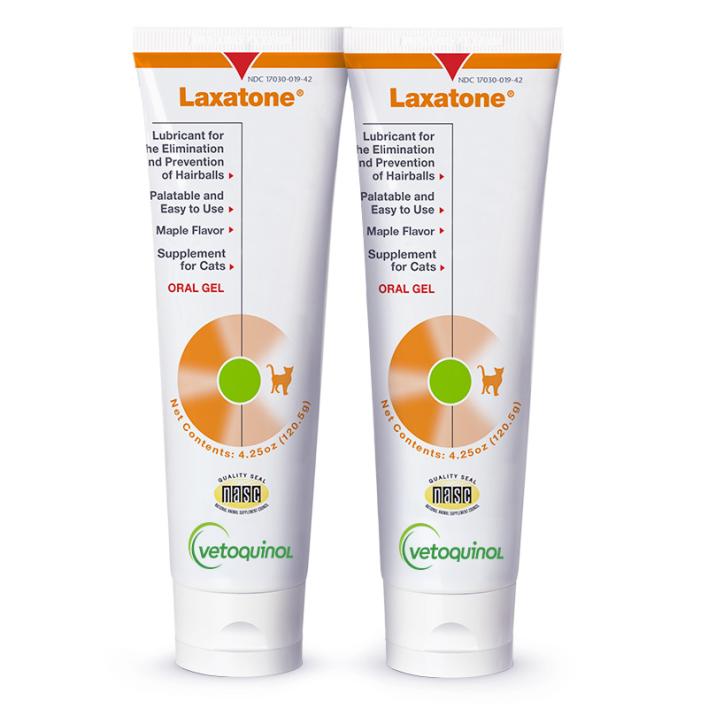
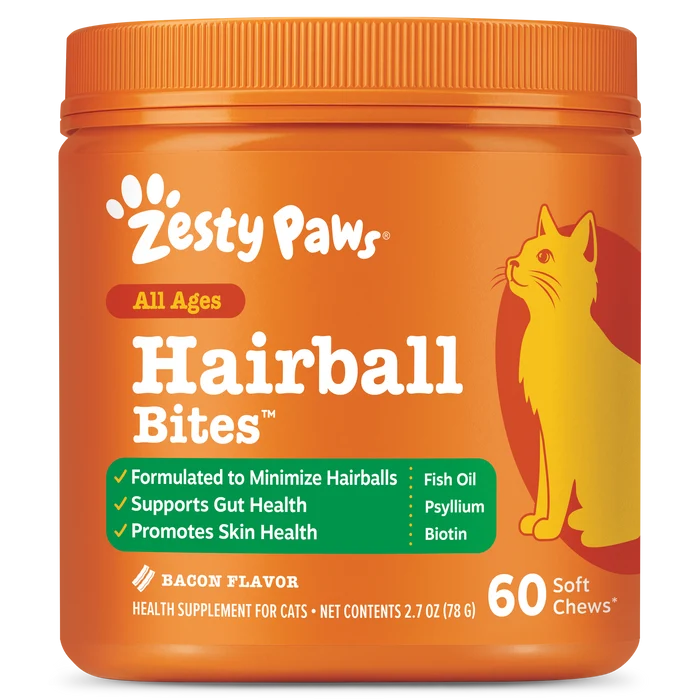
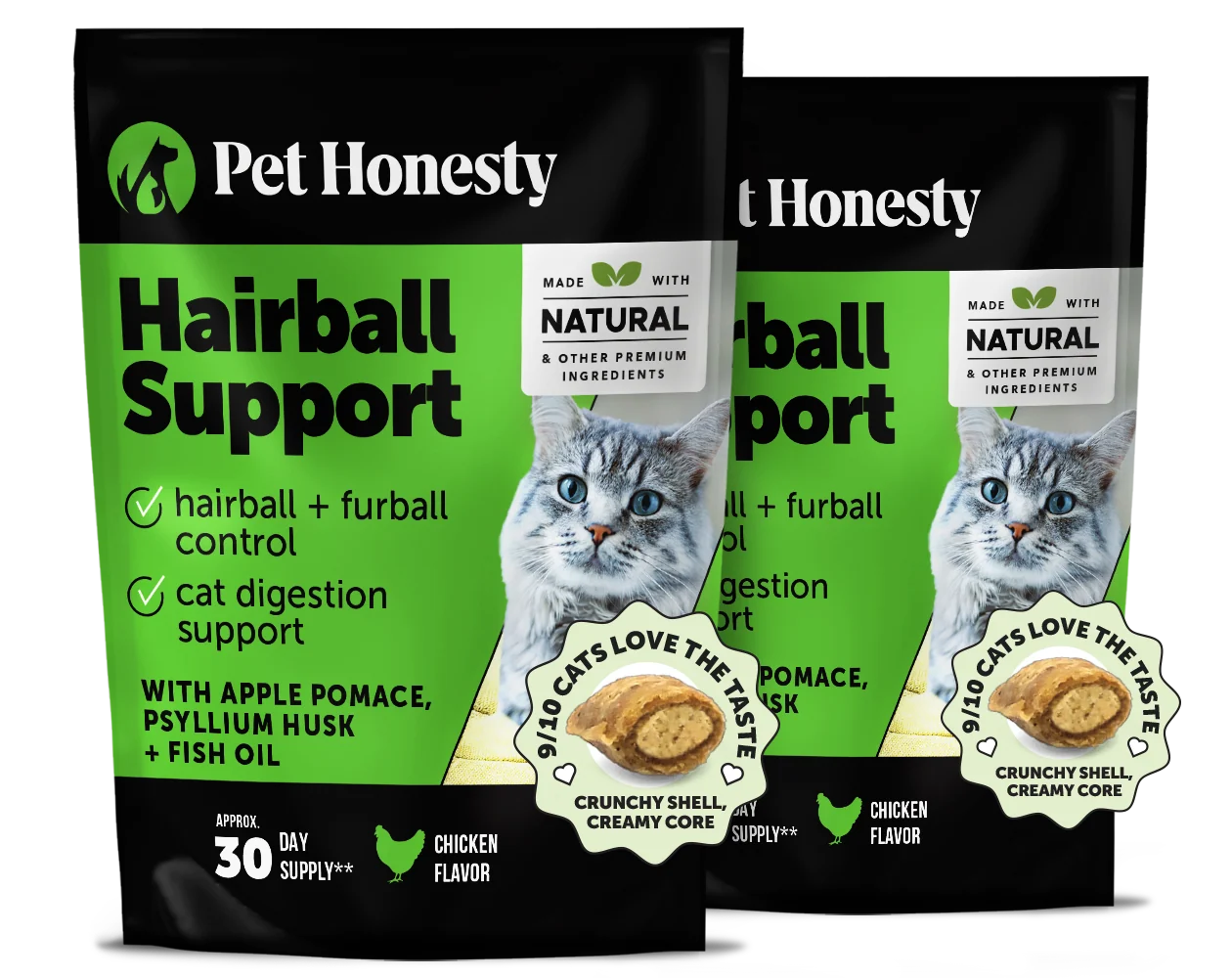
| Product Image | Product Name | Primary Button / Our Rating |
|---|---|---|
Vet-Recommended Lubricant |
| |
Daily Fiber Chew |
| |
Chicken-Flavored Support |
| |
High-Moisture Puree |
| |
Unbeatable velocity crunch treat |
| |
Low-friction high-margin value gel |
|

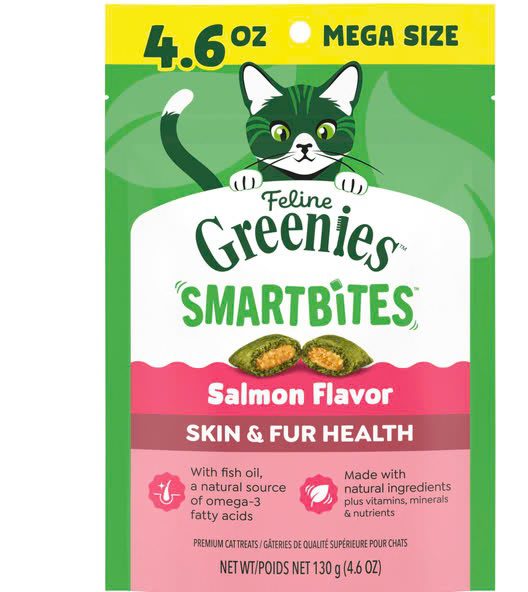
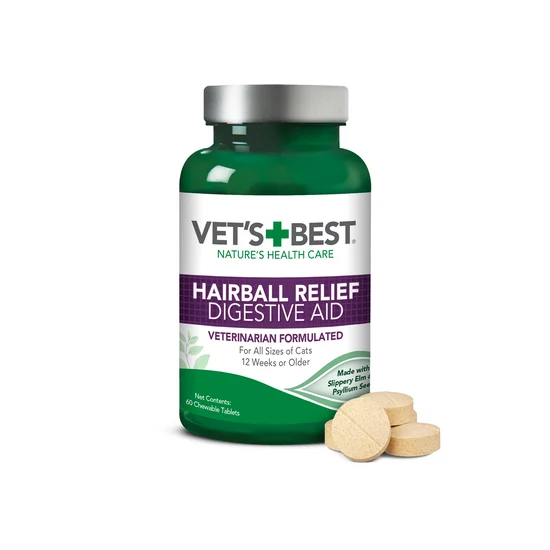
(affiliate link)
Escalation Path and Prevention
Safe therapeutic administration pairs voluntary oral gel delivery during acute episodes with a gradual, four-stage dietary fiber transition over several weeks. Placing lubricant gel on the paw prevents aspiration risk, while stepping high-fiber rations from 25 percent to 100 percent alongside added water prevents gas and soft stool.
Administering a lubricant gel is a two-person job only if the owner makes it one. Place a small ribbon on the cat’s nose or front paw and let the cat lick it off. Never force the gel down the throat, because a syringe delivery in a struggling cat risks aspiration. Follow the product label for dose frequency during an active hairball, then taper off once the mass passes. Lubricant gels coat the trichobezoar and the intestinal lining with a slippery film that reduces friction, and they can work within a short window after administration (Case et al., 3rd ed.). They do not dissolve hair, and they do not address motility. Daily use can interfere with absorption of fat-soluble vitamins, because the oil layer traps vitamin A, D, E, and K before they reach the intestinal epithelium (WSAVA Global Nutrition Committee). Fiber transitions work the opposite way. Introduce a high-fiber diet gradually, starting at 25% new food and 75% old, then moving to 50/50, then 75/25, and finally full transition, because a sudden fiber load produces gas and soft stool that the owner misreads as intolerance. Keep water available at all times and add a tablespoon of warm water to wet meals so the psyllium has moisture to bind. The full transition framework for cat hairball prevention is documented in the cat food archive.
Adverse Events & Contraindications
Clinical safety boundaries prohibit daily petroleum gel maintenance, syringe force-feeding, canine hairball products, and human probiotic substitutions in cats. Chronic vomiting, anorexia, or abdominal pain signal potential intestinal obstruction or infiltrative gastrointestinal disease requiring immediate veterinary diagnostics rather than home fiber escalation or supplemental laxative dosing.
Never ignore chronic hairballs. Recurring trichobezoars can signal inflammatory bowel disease or alimentary lymphoma, and treating them with gel alone delays a diagnosis that matters (Center, Veterinary Clinics of North America, 2005). Never use a lubricant gel as a daily preventive, because the oil layer interferes with absorption of fat-soluble vitamins and masks the motility finding that deserves attention. Never force a cat to swallow a gel, since aspiration is a real risk and the stress makes future dosing harder. Never use dog hairball remedies on a cat, because the dosages and inactive ingredients are formulated for canine physiology. Never assume a hairball is benign. A large trichobezoar can obstruct the intestine, and a veterinary source on feline gastrointestinal obstruction should be consulted when vomiting, anorexia, or abdominal pain accompany the finding. Never feed toxic human foods such as xylitol, grapes, onions, or chocolate during a cat hairball prevention protocol, because those toxins compound any gastrointestinal upset and confuse the clinical picture. Never substitute human probiotic products for veterinary probiotics during a fiber transition. Human strains are selected for the human gut, and dosing is scaled for human physiology rather than feline (WSAVA Global Nutrition Committee). Never start a fiber supplement while the cat is on antibiotics or recovering from illness, because antibiotic therapy changes the gut microbiome and simultaneous variables make the response impossible to interpret. The AVMA literature on feline gastrointestinal disease informs this guidance, and the primary source at JAVMA should be reviewed before altering any cat hairball prevention protocol for a cat with concurrent disease.
Pre-Diet Assessment Markers
Pre-diet baseline assessment establishes objective clinical markers before introducing supplemental fiber or altering rations. A two-minute physical palpation and owner log track hairball frequency, Bristol stool scores, body condition, grooming symmetry, hydration status, dental comfort, and recent antibiotic exposure to isolate true dietary transit response.
The palpation pass runs before the diet changes, and it takes about two minutes. Run your hands along the cat’s flanks and belly to look for bald patches and any lumps under the coat. Check the scruff for skin tenting that signals dehydration. Look inside the ears for odor or discharge. Press lightly on each paw pad for heat or swelling. Lift the coat along the belly and inner thighs to check for redness under thin-coated areas. Note anything that stands out and bring it to the veterinary appointment before the diet switch begins.
Five markers establish the baseline that cat hairball prevention will be measured against.
- Hairball Frequency and Stool Quality: Log hairball episodes and evaluate stool on the Bristol Stool Scale, where a score of 3 or 4 with visible hair indicates normal transit and is the goal of cat hairball prevention. Recurring hairballs warrant veterinary review.
- Body Condition Score and Gastric Distension: Score the cat on the 1 to 9 BCS scale and monitor for abdominal bloating one to two hours after eating, since obesity and delayed gastric emptying can slow motility.
- Grooming Behavior: Observe daily grooming duration and check for symmetric bald patches along the flanks and belly, which indicate over-grooming driven by stress or allergies.
- Hydration Status: Check for skin tenting at the scruff and monitor daily water intake, since dehydration slows transit and undermines any fiber supplement.
- Antibiotic History and Dental Health: Review recent medical history for antibiotic therapy that alters the gut microbiome, and inspect the teeth for tartar and gingivitis that reduce food intake.
Never ignore chronic hairballs. Consult a veterinarian to rule out underlying GI disease. The practical feline care basics cover the owner-side logistics of a structured cat hairball prevention plan.
6.1 Sensory Check: Palatability and Feeding Response
The cat’s willingness to eat signals whether the new cat hairball prevention plan is palatable enough to sustain long-term adherence. Watch for acceptance at the bowl and any sign of refusal, lip curling, or turning away. A fiber-enhanced diet that requires force-feeding fails clinically because cats develop persistent aversion after a single unpleasant meal. Smell the food before serving. A fresh, meaty aroma is normal, while a rancid or sharply acidic smell signals oxidized fat and a degraded batch. Observe stool within 24 to 48 hours of a new formula and log texture, color, frequency, and whether hair appears in the stool. Weigh the cat weekly and photograph the coat monthly. These are owner-side observations, not diagnostic criteria, but they surface problems faster than a follow-up appointment.
The Brushing Protocol
Mechanical coat brushing lowers hairball burden by physically removing loose undercoat before barbed lingual papillae can ingest it. Matching rubber curry combs to short coats and fine-pin slicker brushes to medium or long coats during brief, positive sessions scales effectively with spring and fall shedding cycles.
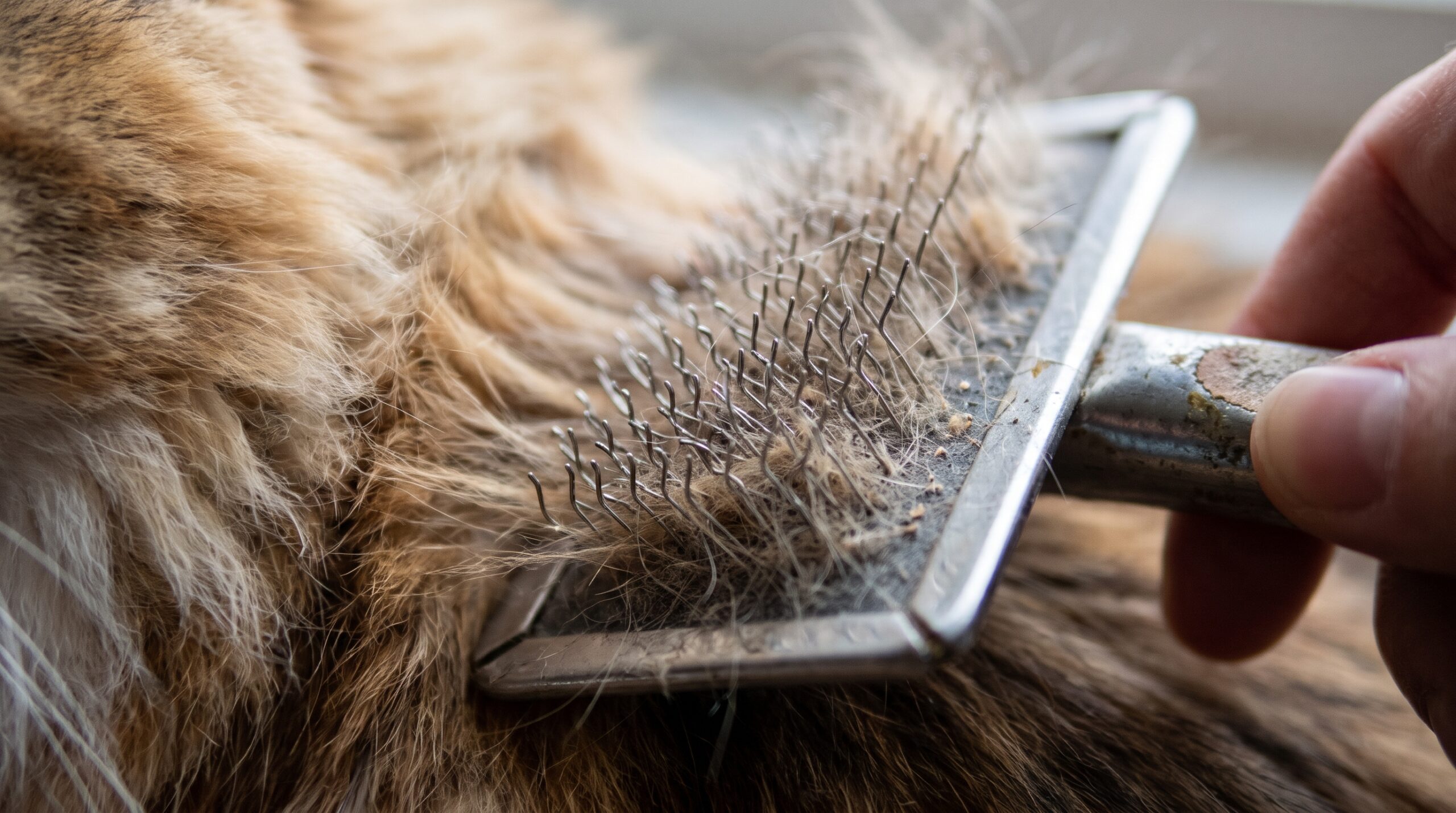
Brushing a cat supports cat hairball prevention when the tool matches the coat and the session stays short. A slicker brush handles medium and long coats and lifts dead undercoat with its fine wire pins, preventing tangles described in our feline coat matting prevention guide. A rubber curry comb can be used on short coats and may double as a massage that cats tolerate. Start with two minutes on the back and flanks, then extend to the belly and hindquarters as the cat settles. Stop before the cat walks away, because a session that ends on the cat’s terms trains cooperation for the next one. In our desk feeding and grooming logs, owners who pair a 10-day gradual psyllium ramp-up with two-minute evening slicker sessions consistently see hair pass in formed stool within two weeks.
Frequency scales with coat length and season. Short-haired cats do well with three sessions per week. Long-haired cats need daily sessions, and seasonal shedding in spring and fall raises that to twice daily for two to three weeks, matching the seasonal feline shedding control guide. Clean the brush after each session so the removed hair does not migrate back onto the coat. The PetMD grooming reference covers tool selection and handling technique, the PetMD cat nutrition reference covers the fiber side of cat hairball prevention, and the AKC nutrition library provides a general reference on how commercial pet foods are evaluated.
Clinical References & Nutritional Disclaimer
According to the veterinary gastroenterology literature on trichobezoars, hairballs reflect delayed gastric emptying and reduced intestinal transit rather than a normal grooming byproduct, and insoluble fiber increases stool bulk and accelerates transit while petroleum-based lubricants coat an existing mass so it can pass. Lubricants interfere with fat-soluble vitamin absorption when used daily, which places them in the acute phase of cat hairball prevention rather than in daily maintenance (Case et al., Canine and Feline Nutrition, 3rd ed.; WSAVA Global Nutrition Committee).
This is for educational purposes. Nutritional interventions should be tailored by a board-certified veterinary nutritionist.
Read more about the institutional research standards behind this protocol and the editorial leadership that reviews every clinical claim.
Related Cluster
Cat hairball prevention decisions connect to every other system a cat owner manages. The breed-specific care protocols explain why Persian and Maine Coon lines carry higher grooming loads, the cat problems section covers over-grooming and stress behavior that drive hair ingestion, and the cat nutrition section documents the fiber targets that support a complete cat hairball prevention plan.
Written by: PGA Nutrition & Dietetics Desk
Reviewed by: PGA Editorial Board (Zaheer Aujla, Head of Board) · Six editorial desks · Institutional review standard
Research sources: PetMD, AKC, CFA, WSAVA, AAFCO, veterinary journals
Last updated: 2026-01-15
As an Amazon Associate I earn from qualifying purchases. This article is editorially independent. Not a substitute for veterinary diagnosis.
Frequently Asked Questions
Are hairballs normal in cats?
No. A hairball is a clinical sign rather than a normal feline function, and it reflects hair accumulating in the stomach faster than transit can clear it (Case et al., 3rd ed.). Recurring hairballs warrant veterinary review to rule out inflammatory bowel disease or alimentary lymphoma. Cat hairball prevention targets the cause, not the vomiting.
What is the best food for cat hairballs?
A high-fiber formula with named animal protein and high moisture content covers both sides of the problem. Crude fiber in the moderate range on a dry matter basis adds stool bulk, and canned food supplies the water that psyllium needs to expand (AAFCO, 2024 Official Publication). Introduce the fiber increase gradually to avoid gas and soft stool during cat hairball prevention.
Can I use petroleum jelly for cat hairballs?
Veterinary lubricant gels use white petrolatum and are formulated for feline dosing, which plain household petroleum jelly is not. Never use a lubricant daily, because the oil layer interferes with absorption of fat-soluble vitamins (WSAVA Global Nutrition Committee). Reserve gels for active hairballs and rely on fiber and brushing for cat hairball prevention.
How often should I brush my cat to prevent hairballs?
Short-haired cats do well with three sessions per week, and long-haired cats need daily sessions with twice-daily brushing during seasonal shedding for two to three weeks. Keep each session short and stop before the cat walks away. Brushing removes hair before it enters the GI tract, which makes it the cheapest cat hairball prevention tool available.
When should I see a vet for hairballs?
Book an appointment when hairballs recur, when the cat vomits without producing hair, or when weight loss appears alongside them. A large trichobezoar can obstruct the intestine, and obstruction is a surgical emergency (Center, Veterinary Clinics of North America, 2005). Chronic hairballs also warrant screening for inflammatory bowel disease as part of a complete cat hairball prevention workup.


The PGA Clinical Desk analyzes AAFCO nutritional guidelines, veterinary dermatological baselines, and genetic sensitivities (MDR1). We translate dense institutional data from the AVMA and NAVC into actionable at-home care protocols. We do not provide veterinary diagnoses.