Written by: PGA Hardware & Equipment Desk
Reviewed by: PGA Editorial Board (Zaheer Aujla, Head of Board)
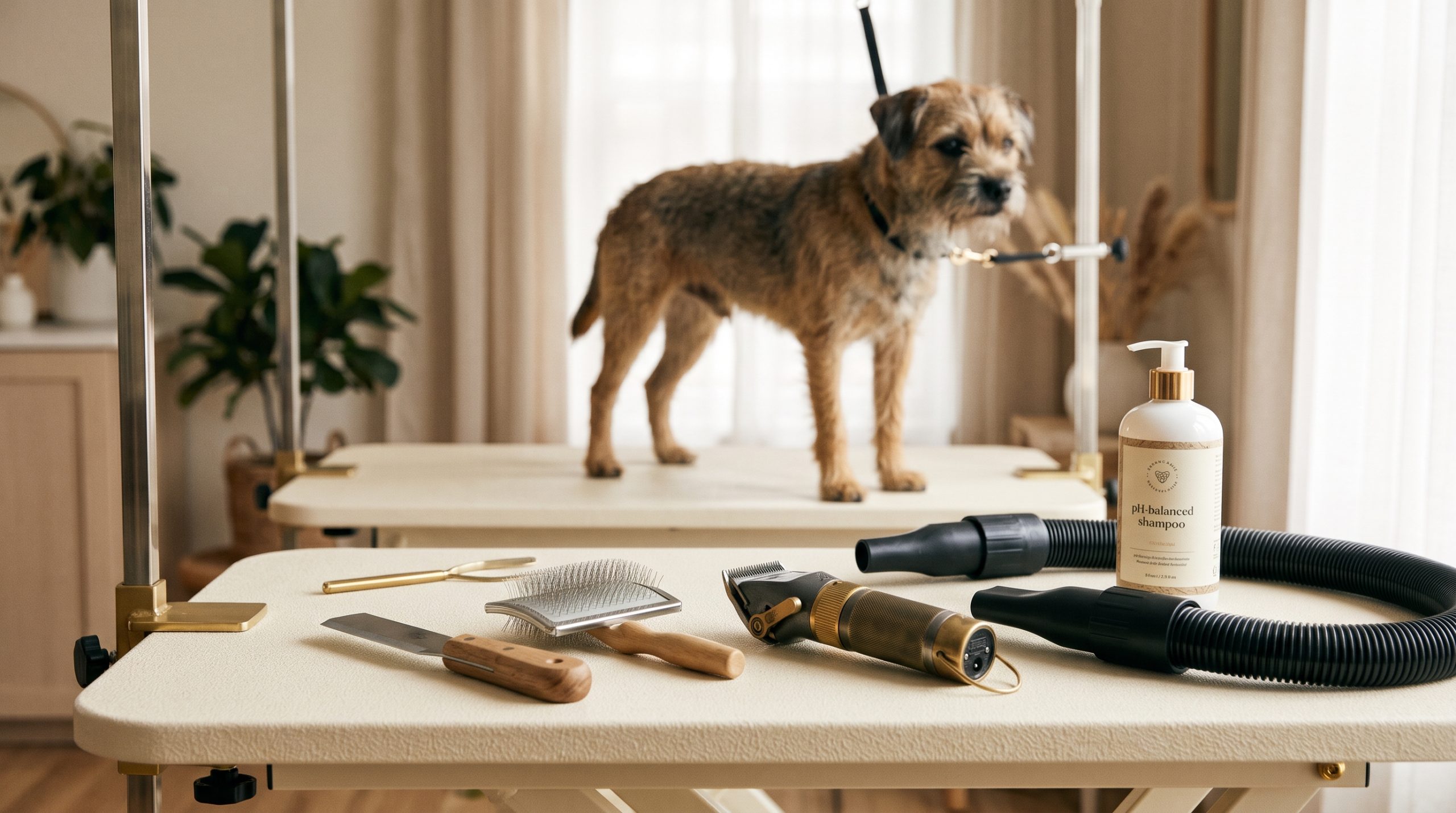
A wire coat grooming system exists because the wire coat is a specific follicular structure built for weather resistance and physical protection, not just rough fur with a nice name. The wire coat has a harsh, flat outer layer with a soft undercoat packed beneath it, and the outer layer has a hard cuticle that sheds water, resists dirt, and blocks UV far better than a soft coat does. When you strip that coat, you pull dead hairs at the root, and the follicle responds by producing a new hair with the same harsh texture it had before. When you clip it, you cut the hair mid-shaft, the blunt tip feels softer immediately, and the follicle eventually cycles toward a woolly coat that has lost both its weather resistance and its color depth. That system is built to preserve the harsh texture the breed was built around, and every tool choice downstream either supports that preservation or accelerates the drift toward soft coat. This protocol covers the biology behind every decision so an owner can choose the stripping path or the clipping path with clear eyes.
Section 1: AIO Direct Answer & Quick Match
A wire coat grooming system is a texture-first tool set, not a standard grooming kit with different labels. It pairs a stripping knife or a quality slicker brush with a high-velocity dryer, a low-noise vacuum, a pH-balanced shampoo that does not soften the hair shaft, and a guarded nail grinder that handles the hard terrier nail. The goal is to manage the undercoat, remove dead wire hairs at the root when the owner chooses to strip, and protect the harsh outer layer from the tools that would break it mid-shaft. Owners who build this wire coat grooming system around the biology of the follicle end up with a coat that stays weather-resistant. It keeps color. It mats less than a clipped coat does. The three quick match routes below send you to the right first purchase based on which path you are taking.
Quick Match Verdict:
-
If you want to maintain harsh texture (hand-stripping): start with the Chris Christensen Big G Slicker Brush.
Check Price on Amazon
(affiliate link) -
If you choose the clipping route (softer coat): start with the Andis AGC2 Clipper.
Check Price on Amazon
(affiliate link) -
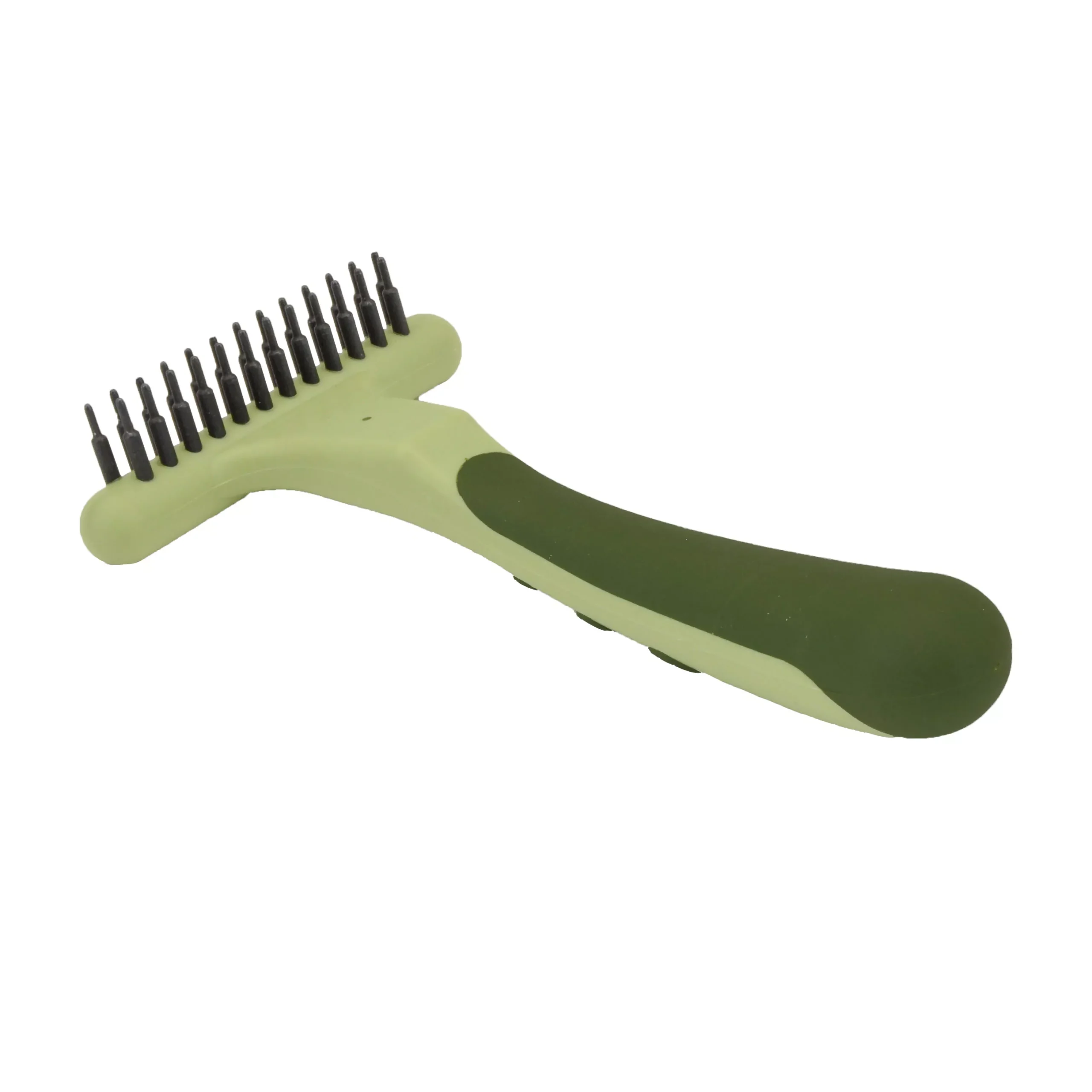
If your dog’s wire coat is matting at the legs: start with the Safari Undercoat Rake.
Check Price on Amazon
(affiliate link)
Section 2: The Institutional Moat
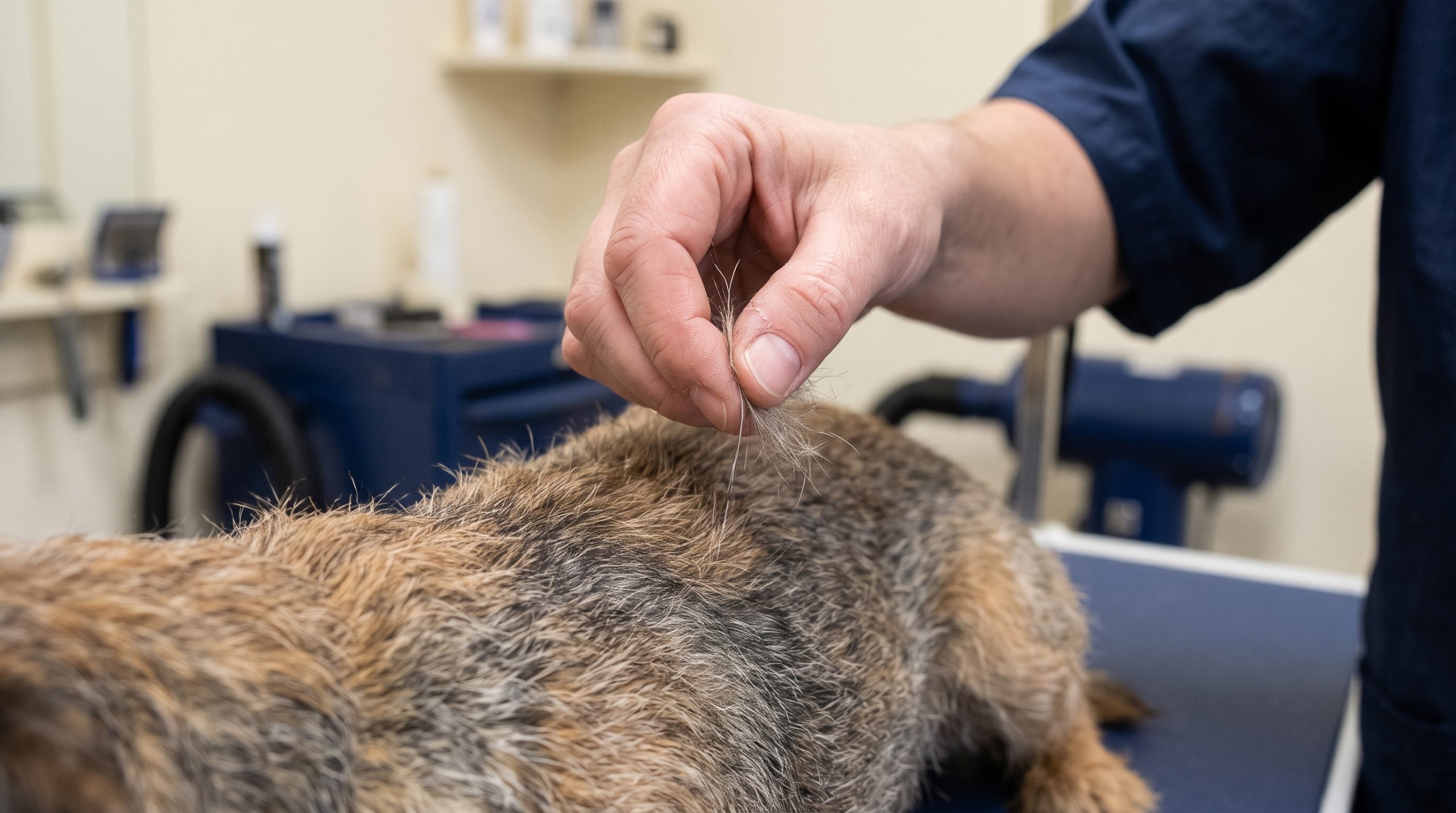
The AKC grooming resources describe the wire coat as a breed-defining characteristic rather than a styling preference, which is why stripping appears in so many terrier and schnauzer standards. The standard is not asking for harsh texture as an aesthetic. It is asking for a coat that has not been structurally altered. A proper wire coat grooming system relies on this biological reset. Stripping removes a dead hair at the follicle so a new hair grows in with the same hard cuticle the breed was bred to produce. Clipping cuts the hair mid-shaft, and the blunt edge that results feels softer to the hand and lies flatter against the body than a stripped coat does.
The FCI breed standards treat coat texture as a functional trait across terrier, schnauzer, and wirehaired pointing breeds. The hard outer layer sheds water and resists burrs. The soft undercoat insulates. Clipping cuts the hard layer off at mid-shaft, and over successive clips the follicle begins producing softer, thinner hair in response to the altered growth cycle. Owners who clip a wirehaired dog for convenience accept that the coat will lose texture, fade in color depth, and become more prone to matting at the legs and chest because the softer hair binds together more readily. That trade is a choice, not a failure. Any wire coat grooming system must make this trade with the biology in view. The breed-specific protocols guide covers which wire breeds tolerate clipping better than others.
The core grooming guide establishes the general cadence. The wire coat version raises the stakes on tool choice because a wire coat can be permanently altered by a single wrong tool decision in ways a smooth coat cannot. That is the institutional reason the wire coat grooming system treats texture as the primary variable rather than coat length.
Section 3: Bio-Mechanical Breakdown
Every tool category in a wire coat grooming system is a texture-risk decision. The question is not which tool cleans best. The question is which tool touches the harsh outer layer without cutting, softening, or breaking it. Every choice you make inside a wire coat grooming system either preserves the harsh outer layer or drifts the coat toward soft. Each section below names the biological risk and the tier logic that matches it.
3.1 Clippers
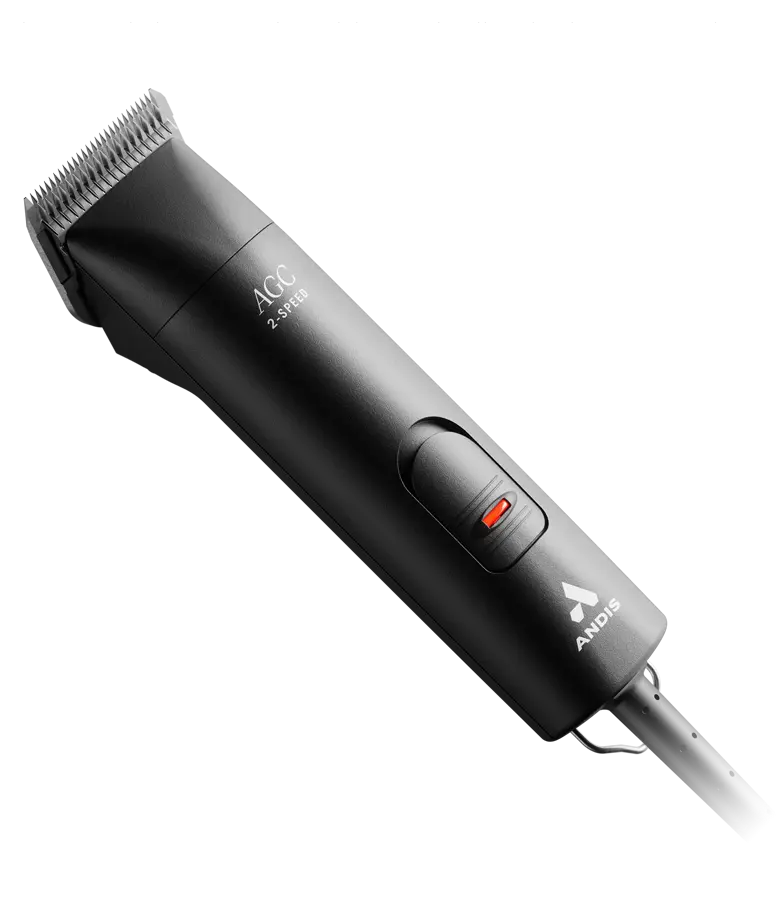
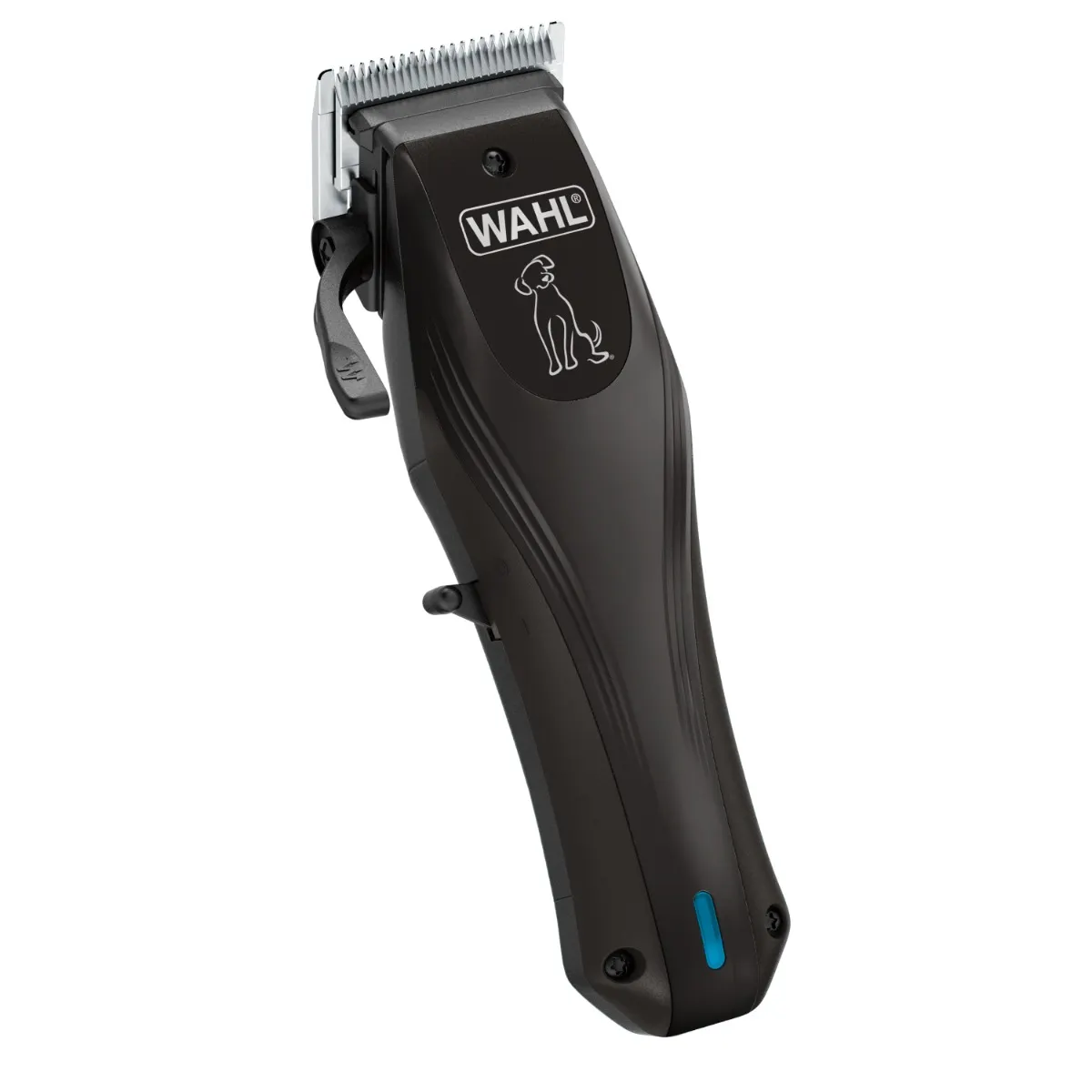
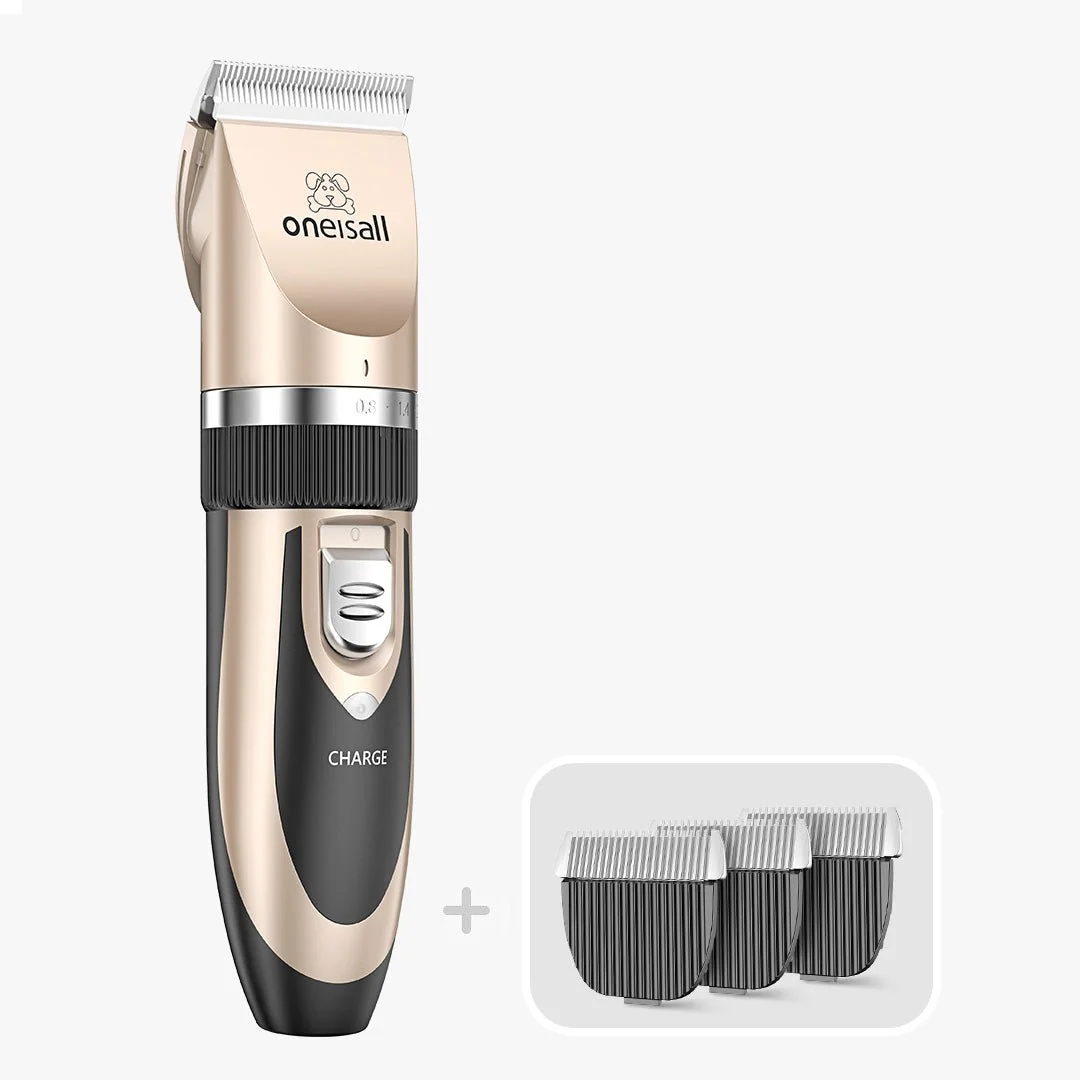
Clipping a wire coat is a deliberate choice to cut through the hard cuticle mid-shaft, and that choice has mechanical consequences. The blade slices across the cuticle rather than pulling the hair from its follicle, so the blunt end that remains feels softer to the hand and lies flatter against the body than a stripped hair does. Over successive clips the follicle cycles toward a softer, thinner hair because the hair never completes its natural growth and shed sequence. That is the biological drift owners notice after a year of clipping a Schnauzer or a Wire Fox Terrier. High-torque matters here because wire breeds carry a dense undercoat beneath the harsh outer layer, and a pivot motor that stalls under that load forces the user to push harder, which drags a hot blade across skin already protected only by a hard cuticle. A rotary motor that holds speed under load removes the push cycle and keeps blade temperature predictable. The biological goal when clipping is to cut the coat cleanly and evenly without transferring friction heat into the skin or creating the uneven patchwork that comes from stall-and-push. Owners who choose this path should choose the motor that makes the cut predictable. A reliable wire coat grooming system depends entirely on this predictable cut.
Clinical Verdict: Andis AGC2 for the clipping route on pet homes because rotary torque holds under dense undercoat. Wahl Power Pro for sanitary trims and paw pads. oneisall only for pads, never for the body on a wire coat.
| Product Image | Product Name | Verified Spec | Primary Button / Our Rating |
|---|---|---|---|
Pro Tier: Salon Standard |
|
| |
Mid Tier: Cordless Heavy Duty |
|
| |
Budget Tier: Quiet & Light |
|
|
3.2 Dryers
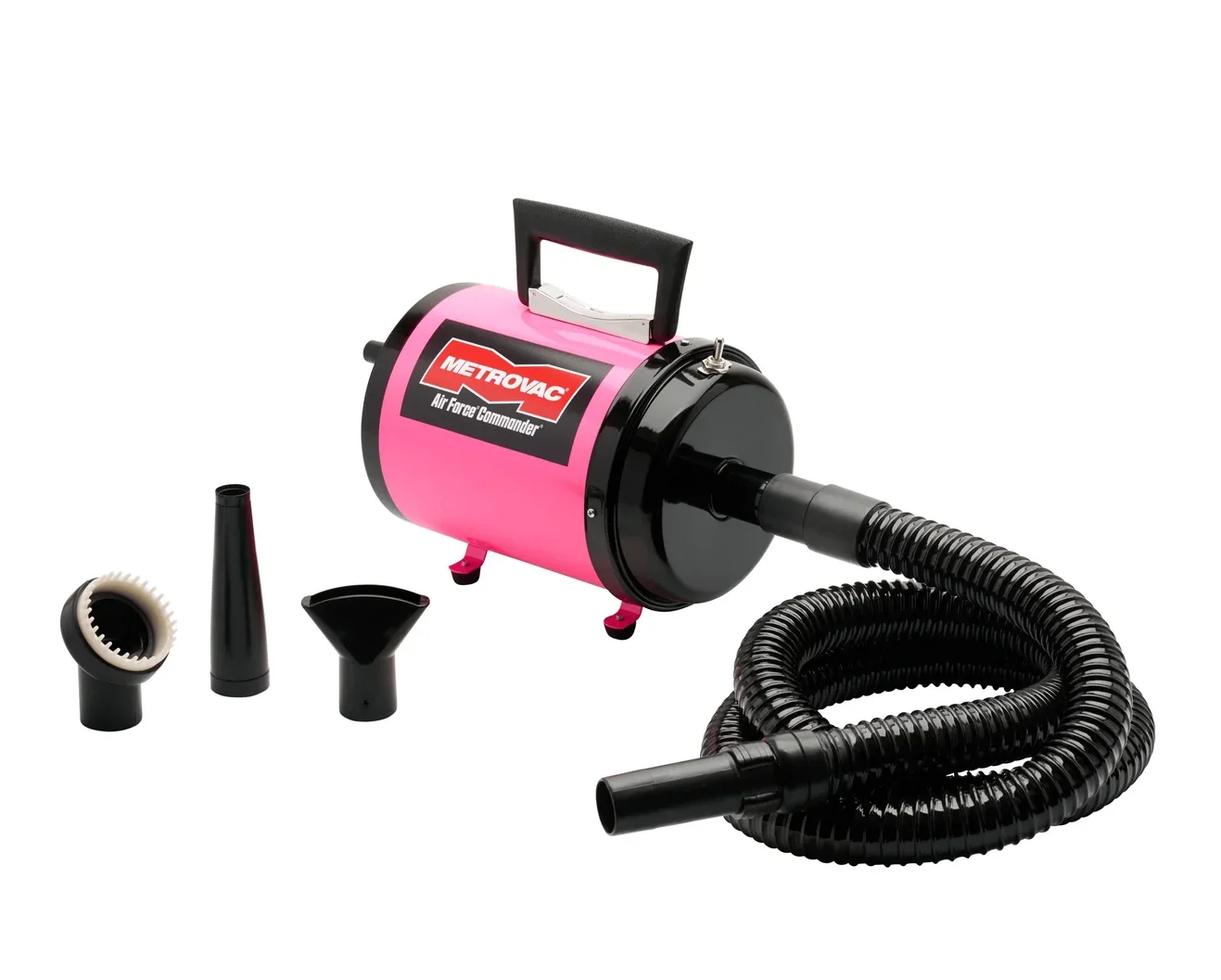
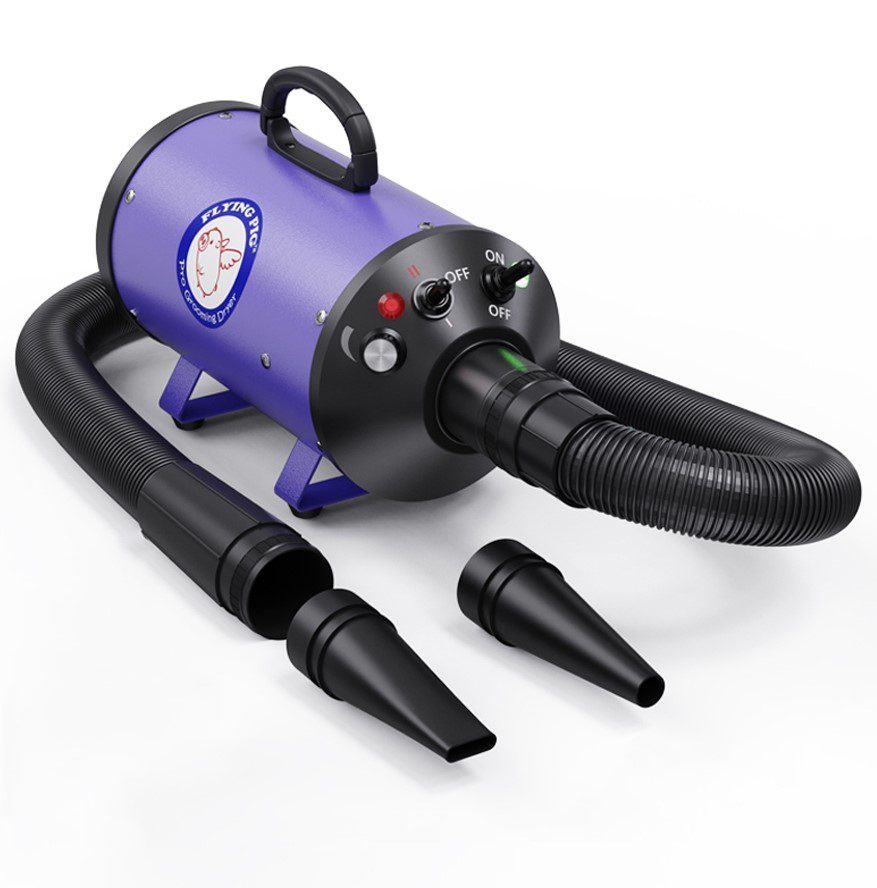
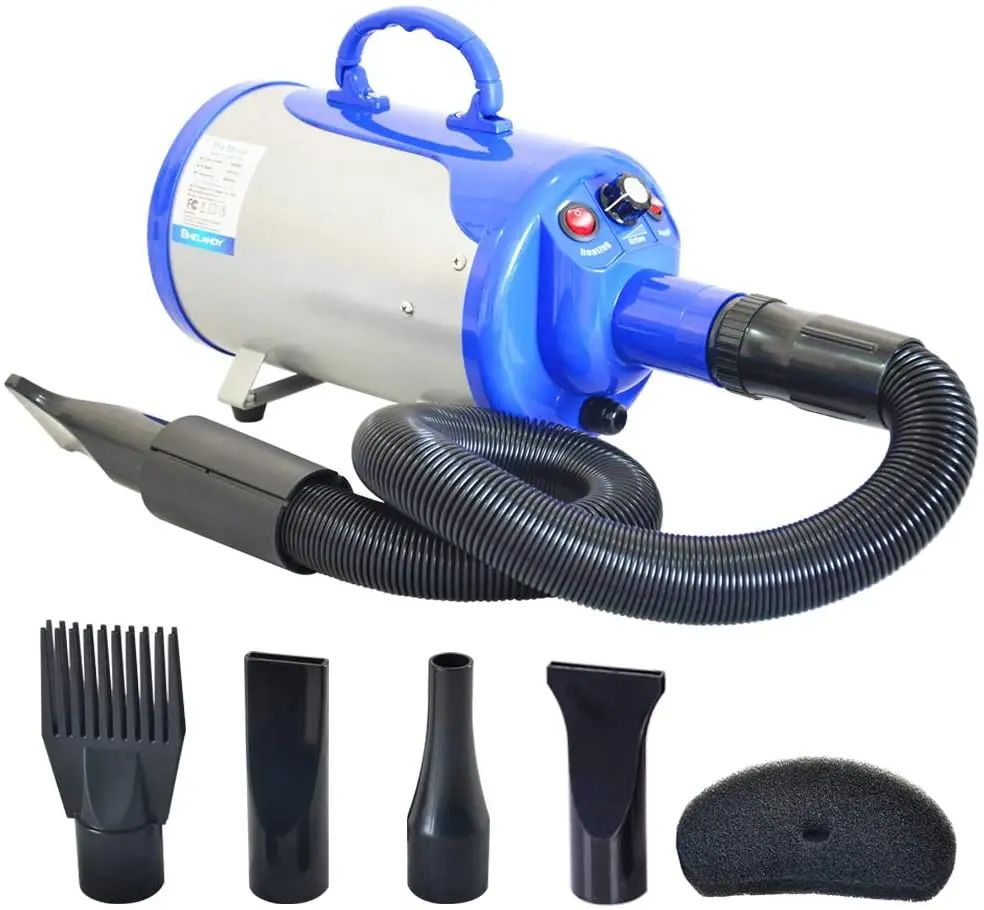
Wire coats trap moisture in the dense undercoat beneath the hard outer layer, and that trapped moisture is the direct driver behind hot spots and post-bath coat funk. The hard cuticle on top sheds water off the surface, which creates the illusion that the coat is dry while the undercoat beneath it stays wet for hours against the skin. High-velocity air solves that problem by separating the harsh topcoat from the undercoat so air can reach the skin and water can leave. Heat is the second problem. Wire hair is brittle by design, and heat cooks the cuticle, strips the natural oils that give the coat its weather resistance, and makes the hair snap when brushed. A dryer that runs cool with high velocity dries the undercoat without altering the coat’s physical properties. A successful wire coat grooming system relies on high-velocity air to prevent this trapped moisture. The biological goal is skin dryness at ambient temperature, not coat dryness at high heat, because a wire coat loses texture permanently when it is dried hot enough to damage the cuticle.
Clinical Verdict: Metro Air Force Commander for full-coat drying at ambient temperature. Flying Pig on medium coats with the heat dial at minimum. SHELANDY for faces and paws only. No heat on a wire coat, ever.
| Product Image | Product Name | Verified Spec | Primary Button / Our Rating |
|---|---|---|---|
Pro Tier: Lifetime Warranty |
|
| |
Mid Tier: Steel Shell Power |
|
| |
Budget Tier: High CFM Value |
|
|
3.3 Vacuums
Wire coats shed very little of the harsh outer layer, but the soft undercoat still blows out twice a year, and that undercoat is what weaves into the topcoat and creates the leg mats and behind-the-ear tangles wire breeds are known for. A grooming vacuum captures the fine undercoat before it resettles into the harsh outer layer, which is the moment mats begin. Suction is not the point. Capture is. Noise is the third variable. Terriers and wirehaired breeds tend to be reactive dogs, and a loud vacuum spikes cortisol fast enough that the dog fights the brush and the undercoat stays in place. A low-noise vacuum keeps the dog still so the brush can reach the undercoat before it binds. A HEPA filter keeps fine dander out of the room, which matters for owners with their own allergies. Integrating this capture method into a wire coat grooming system stops mats before they start. The biological goal is to remove loosened undercoat while the dog is calm enough to stand for a full pass.
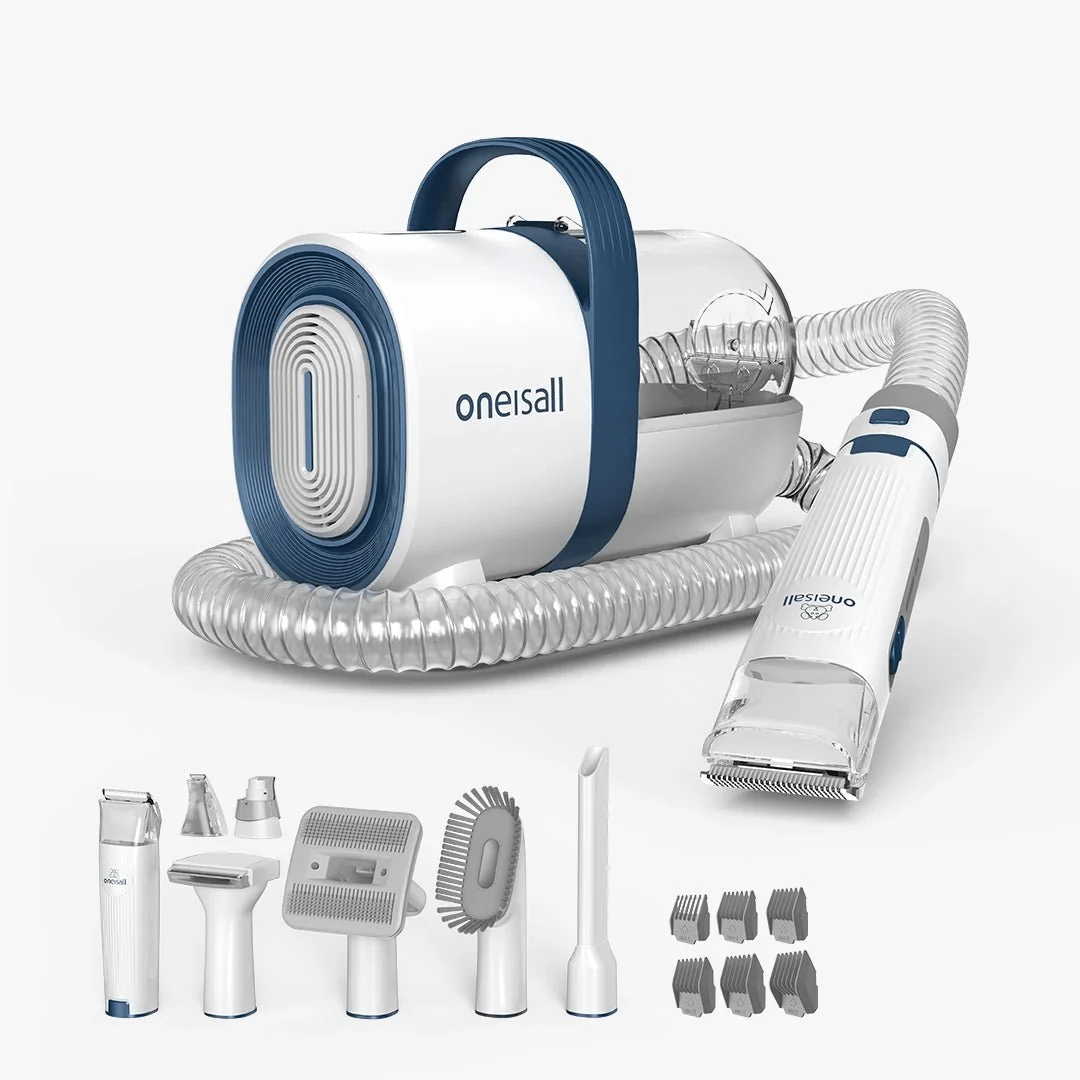
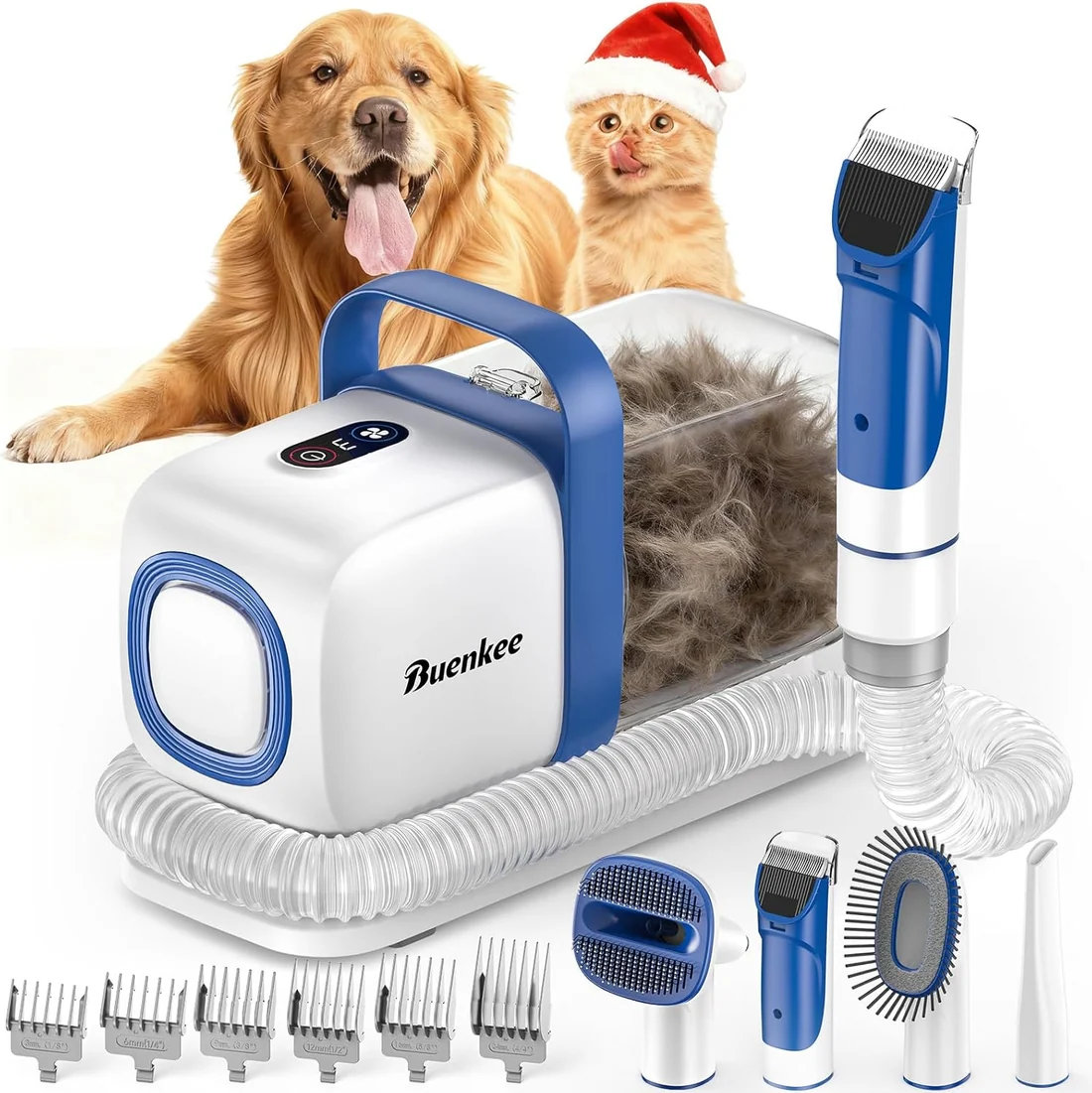
Clinical Verdict: Neakasa P2 Pro for noise-sensitive terriers because the low-noise motor keeps cortisol low. oneisall 7-in-1 for medium shedding. Buenkee for short-coated wire mixes only.
| Product Image | Product Name | Verified Spec | Primary Button / Our Rating |
|---|---|---|---|
Pro Tier: Max Suction |
|
| |
Mid Tier: All-in-One |
|
| |
Budget Tier: High-Capacity Entry |
|
|

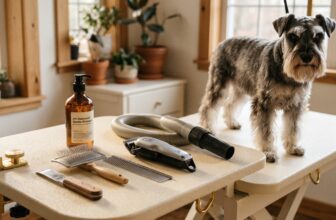
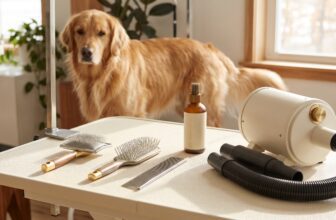
3.4 Brushes (The Stripping Tools)
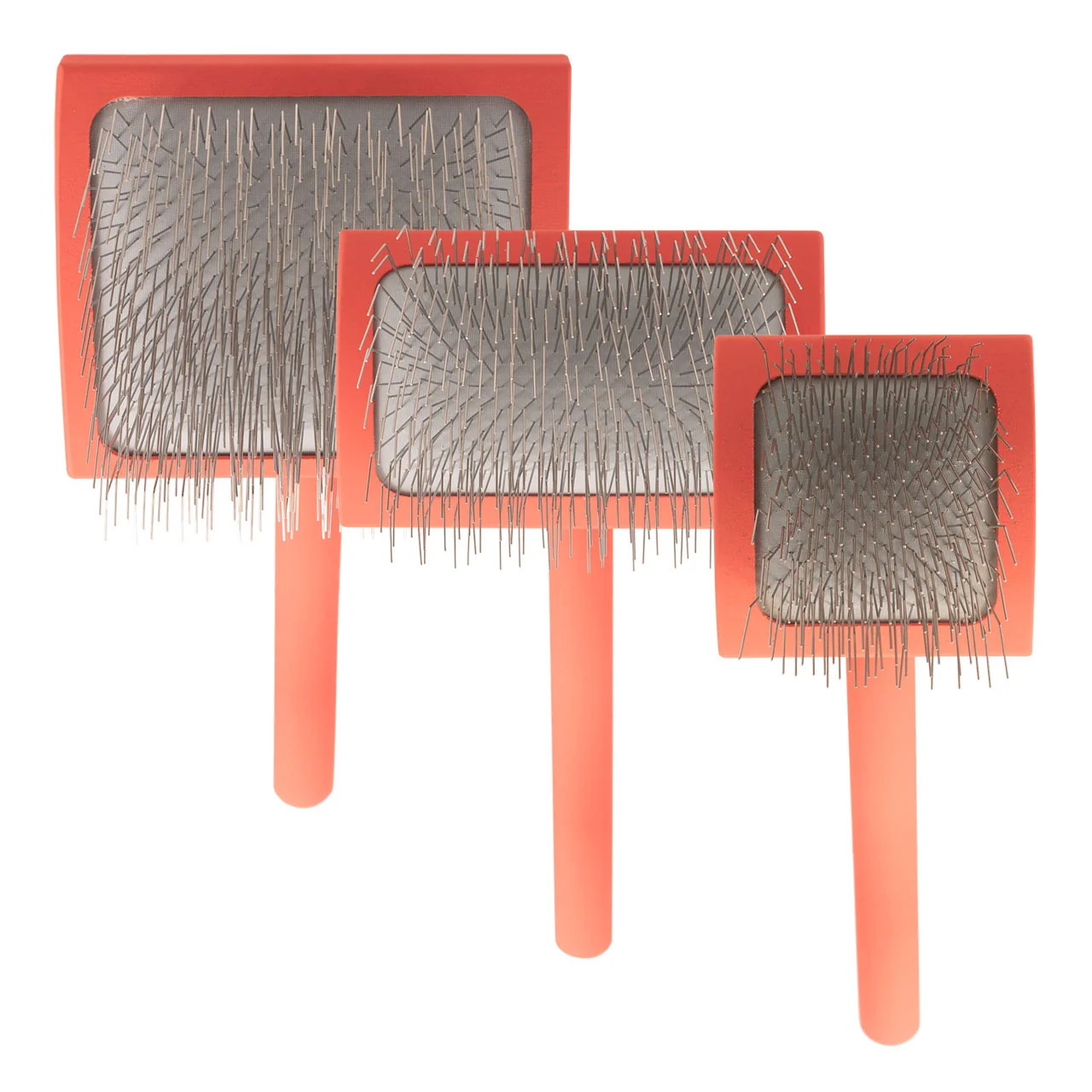
This is the core tool category in a wire coat grooming system, and the tools do not substitute for each other. A stripping knife pulls dead wire hairs from the follicle in the direction of growth, which triggers a new harsh hair to grow in the same follicle. A carding knife works on the undercoat without touching the harsh outer layer. A slicker brush manages the undercoat and smooths the topcoat, and it cannot pull a dead wire hair from the root because the pins cannot grip the hard cuticle firmly enough. That is the exact reason a slicker is not a stripping tool. Owners who try to strip with a slicker break the hair mid-shaft and produce the same soft texture clipping does, except with a ragged edge that catches on everything. The Chris Christensen Big G is the finishing brush because flexible pins separate the loosened undercoat from the live coat without gouging the skin. The rake belongs only on the soft undercoat of a wire breed and never on the harsh topcoat, because rake tines snap wire hairs on contact. The biological goal is to preserve the harsh outer layer while keeping the soft undercoat from matting.
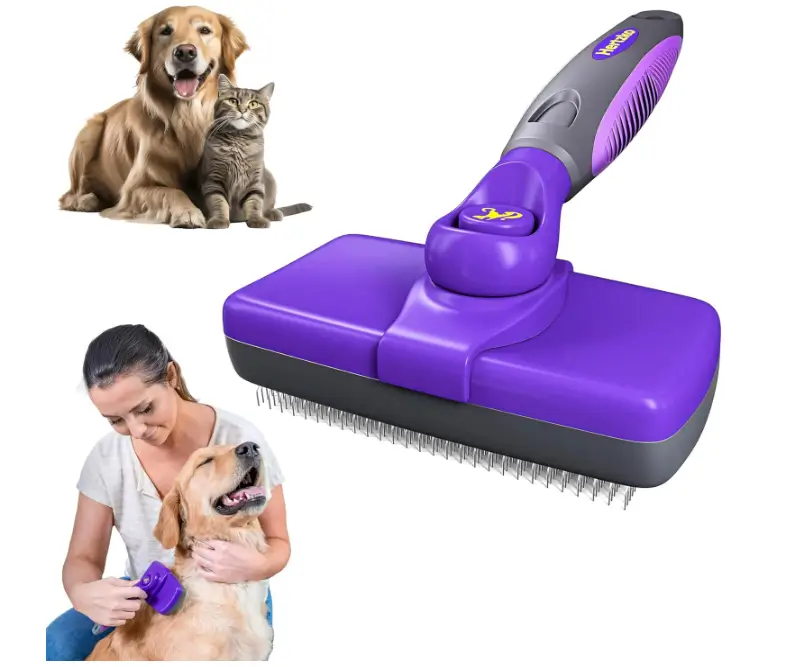
Clinical Verdict: Chris Christensen Big G for finishing and undercoat management. Hertzko for light maintenance. Safari Undercoat Rake only on the softer undercoat of wire breeds, never on the harsh topcoat. Pair the slicker with a stripping knife for the actual wire work.
| Product Image | Product Name | Verified Spec | Primary Button / Our Rating |
|---|---|---|---|
Pro Tier: Zero Abrasion |
|
| |
Mid Tier: Easy Clean |
|
| |
Budget Tier: Deshedding |
|
|
3.5 Shampoos
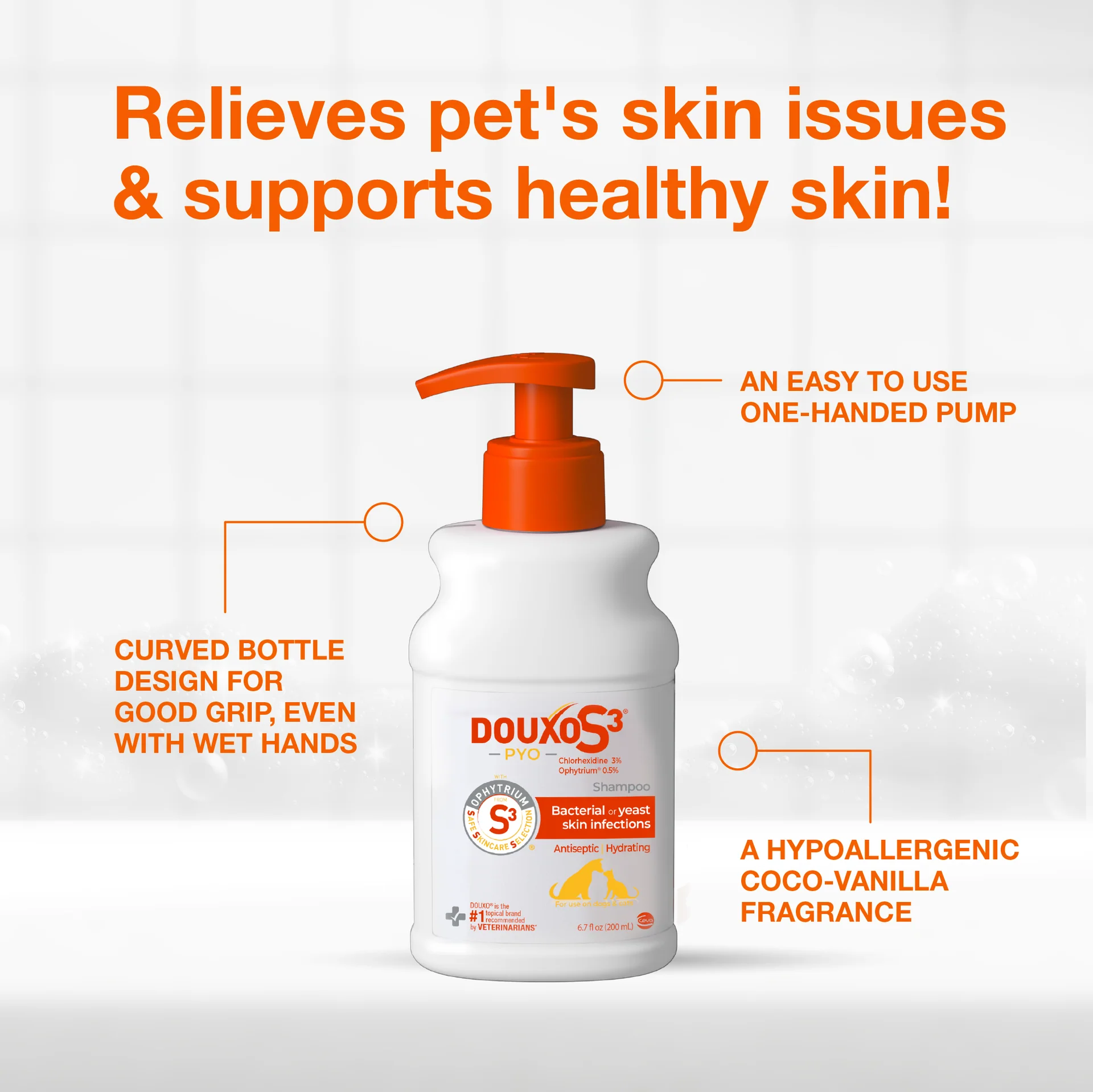
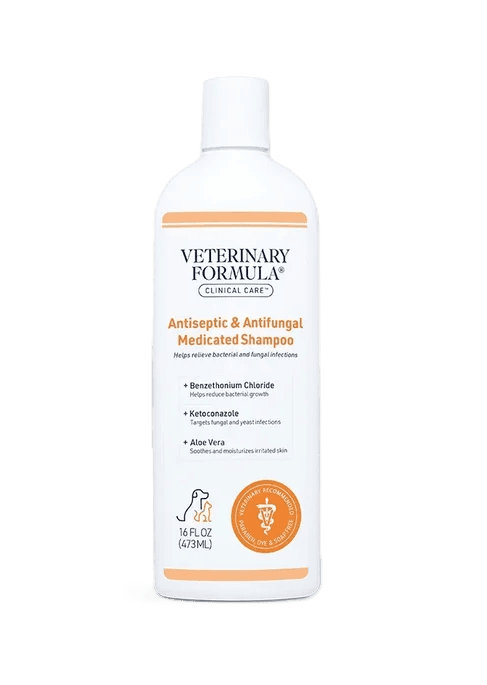
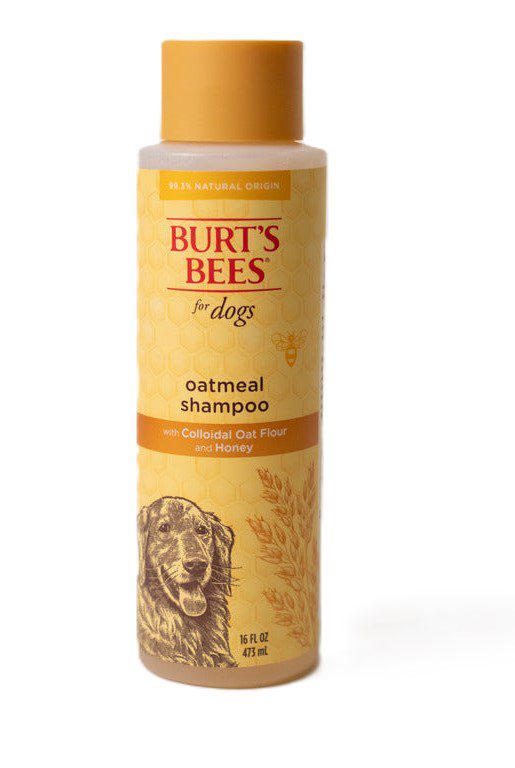
A wire coat needs a shampoo that cleans without stripping the natural oils that give the coat its harsh, weather-resistant feel, and that requirement rules out most of the conditioning formulas sold for soft-coated breeds. Heavy conditioners coat the hair shaft and soften it, which is exactly the opposite of what a wire coat needs. The right shampoo is pH-balanced for canine skin, soap-free at the surfactant level, and free of the silicone and panthenol additives that smooth a soft coat and flatten a wire coat. A pH-balanced formula preserves the acid mantle beneath the coat so the skin does not overproduce sebum to compensate for a stripped barrier, which is the underlying mechanism behind greasy coat syndrome in over-shampooed wire breeds. Active ingredients still matter when the skin is compromised. Chlorhexidine and climbazole target the bacterial and yeast infections that hide under dense wire coats. Oatmeal soothes healthy skin without softening the coat. Selecting the right shampoo is a critical step in any wire coat grooming system. The biological goal is a clean coat and a preserved barrier, not a softened hair shaft.
Clinical Verdict: Douxo S3 PYO for skin issues under the wire coat. Veterinary Formula for general antiseptic maintenance. Burt’s Bees Oatmeal for gentle, non-stripping cleaning on healthy skin. No conditioner after any of them.
| Product Image | Product Name | Verified Spec | Primary Button / Our Rating |
|---|---|---|---|
Pro Tier: Prescription-Strength Antiseptic |
|
| |
Mid Tier: OTC Medicated |
|
| |
Budget Tier: Barrier-Safe Maintenance |
|
|
3.6 Nails
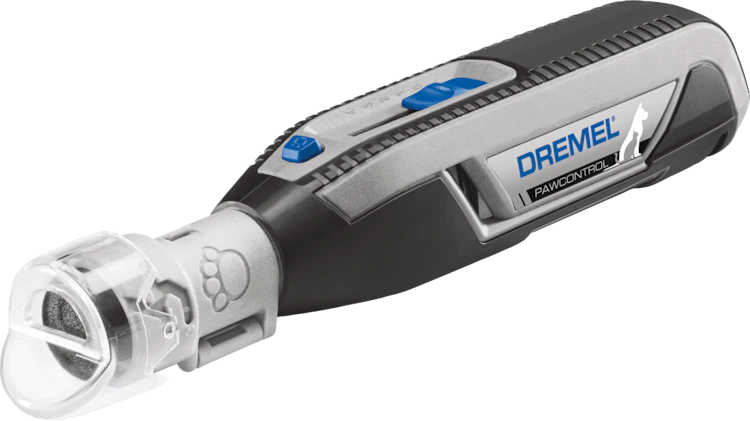
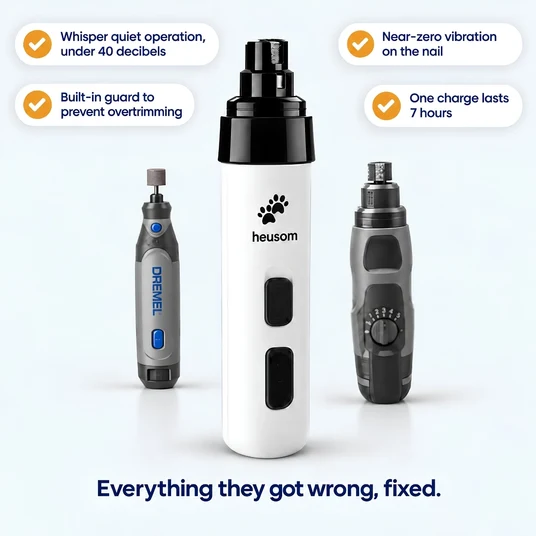
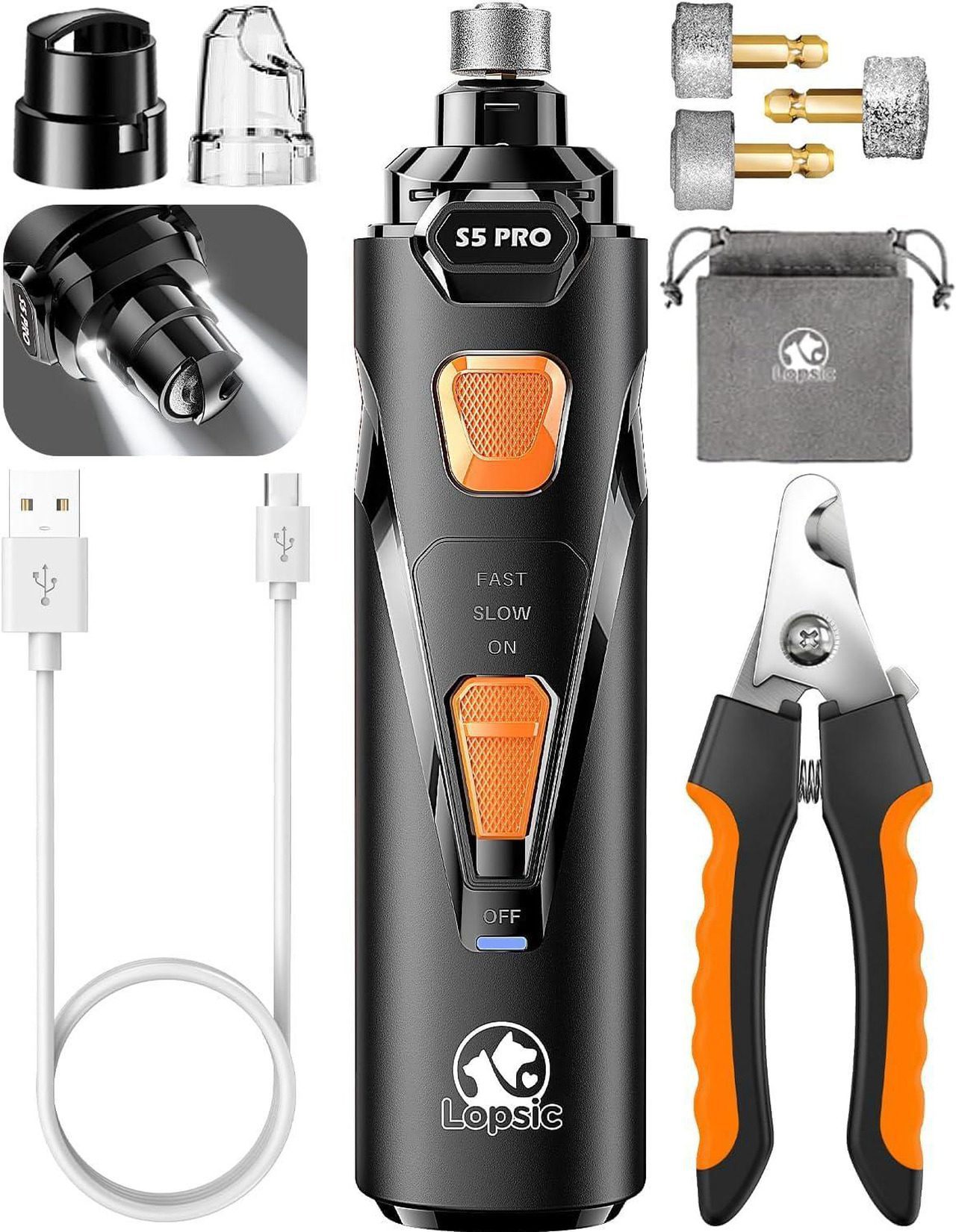
Terriers and wirehaired breeds carry thick, hard nails that guillotine clippers can crush before they cut, and a crushed nail sends a pain signal through the quick that teaches the dog to fight the paw handling for the rest of its life. A grinder sands the nail in small increments and reaches the precision that a clipper cannot on a thick nail. Vibration is the trade. A grinder transfers more sensation into the paw than a clipper does, and a wire breed that is already reactive to handling registers that vibration as a threat. Low-noise and low-vibration models reduce the stress response enough that the dog stands still for the grind. A guard that prevents over-grinding past the quick protects the dog from the pain spike that ends the session. The nail grinding phase of a wire coat grooming system must prioritize low vibration. The biological goal is to shorten the nail to just before the quick without crushing pressure and without triggering the stress response that makes future nail sessions impossible.
Clinical Verdict: Dremel PawControl for safety and precision because the guard prevents quick injury. LOPSIC for noise-sensitive dogs during desensitization. Heusom only for light nails on calm dogs.
| Product Image | Product Name | Verified Spec | Primary Button / Our Rating |
|---|---|---|---|
Pro Tier: High-Output Precision |
|
| |
Mid Tier: Ultra-Low-Noise Entry |
|
| |
Budget Tier: Whisper-Quiet Desensitization |
|
|
Section 4: Choice Architecture
The wire coat grooming system splits into two paths, and each path demands a different spend. The Stripping Path suits owners who truly want to keep breed-standard harsh texture. They must learn the technique first. That path requires a quality slicker for undercoat management, plus a stripping knife or the willingness to learn hand-stripping with fingers and thumb. The Clipping Path suits owners who want a simpler routine and accept the softer coat that comes with it. That path requires a high-torque clipper. It also requires a cool-air dryer and a sharper commitment to weekly undercoat management, since softer coats mat faster than stripped ones. Both paths share the same shampoo and nail grinder. They share a vacuum too, so the spend difference lands almost entirely on the clipper and the stripping tool. Compare options at the grooming tools hub before committing. Owners who buy both a clipper and a stripping knife usually end up clipping, which is fine as long as the choice is conscious.
Sensory Check: Brushless vs. Rotary Motors
In a wire coat grooming system, motor type decides what a wire breed hears and feels before any tool touches the coat, and that sensory load matters more on reactive terrier types than on calmer breeds because a stressed dog fights the very handling that keeps the coat correct. Brushless motors eliminate the carbon brush contact that produces the buzzing hum on cheaper cordless units, and they hold a steadier speed as the battery drains. Rotary motors, common in corded professional clippers, trade a little weight for torque that does not sag when a dense undercoat loads the blade. Pivot motors sit at the bottom of the price ladder and slow noticeably under load. That slowdown is audible. It is also the moment a wire breed decides the clipper is a threat.
Noise behaves the same way across dryers and vacuums. A larger impeller turning at lower revolutions moves the same air volume with less high-frequency whine than a small impeller spinning fast. That whine, not the raw airflow, is what most dogs react to first. Published decibel figures vary by distance and measurement method, so verify any number against the manufacturer’s own listing before you rely on it. Vibration travels through the hand as much as the ear, and brushless clippers and grinders pass far less vibration into the palm. Less vibration means less pressure transferred to skin and coat, and less pressure means fewer snapped wire hairs on a dog that is already bracing against the tool.
Section 5: Clinical Contraindications
Never include conditioner in your wire coat grooming system. Conditioners coat the hair shaft with lipids and polymers that soften the hard cuticle, and a softened wire coat loses the weather resistance the breed was bred to carry. Never use a slicker brush to try to pull dead wire hairs. The pins cannot grip the hard cuticle firmly enough to extract the hair from the follicle, so they break the hair mid-shaft instead, which produces the same soft texture as clipping with a ragged edge that catches on every burr in the yard. That mistake is the most common cause of a coat that goes soft without the owner ever picking up a clipper. Never strip a dog that has been clipped for years. The follicle has cycled toward softer production under repeated clipping, and a stripping attempt on that coat will pull live hairs and cause pain without resetting the texture the owner was hoping to recover. Wait for a full shed cycle or accept the softer coat. Never use a high-heat dryer on a wire coat. Heat cooks the cuticle, evaporates the natural oils that give the coat its stiffness, and leaves the hair brittle enough to snap under a slicker. The AVMA veterinary literature documents post-clipping coat changes and cuticle damage as real outcomes in wire breeds, not cosmetic preferences. Each of these contraindications exists because the wrong move on a wire coat is not reversible in a single groom cycle, and the cost of correcting the drift lands in months of patient regrowth instead of a single session.
Section 6: Pre-Groom Texture Checklist
- Pinch a hair on the back. If it bends easily, the coat is soft from clipping. If it snaps back or feels harsh, the coat is wire and strippable.
- Check the color depth. Clipped coats often fade over successive cycles because the softer regrowth holds less pigment.
- Look for mats behind the ears and under the front legs. Those are the friction points where soft regrowth tangles first.
- Smell the coat. A damp, musty smell means the undercoat is trapping moisture against the skin and needs a high-velocity dry before anything else.
- Check the paw pads for impacted hair. Wire breeds pack hair between the pads that hides nail length and collects debris.
Never apply a wire coat grooming system to a dog with active skin lesions or a fever. Refer to a veterinarian first. The full guides index covers breed-specific texture variations, which matter when you tailor a wire coat grooming system to a specific breed.
Interlude: The Stripping Technique
Hand-stripping pulls dead wire hairs in the direction of growth using the thumb and forefinger, or a stripping knife held flat against the coat. The motion is a firm pull, not a yank. A hair that is ready to come out releases with almost no resistance, and a hair that is not ready stays put. That distinction is why stripping is not painful when it is done on the correct cycle. Pulling a live hair hurts because the follicle is still attached. Pulling a dead hair does not, because the follicle has already released it. Mastering this technique is the cornerstone of a preservation-focused wire coat grooming system.
The stripping knife is faster on large areas like the back and flanks, but the hand gives more feedback on the sensitive zones around the ears and the throat. Most owners learn the knife first and the hand second, which is backward. Learn the feel of a ready hair by hand before picking up the knife, then use the knife to work faster once the timing is clear. The PetMD dog bathing guide covers bath timing around a stripping session, which matters because a stripped coat should not be bathed for several days afterward.
Section 7: Clinical Citations & Vet Disclaimer
The AKC grooming resources and the FCI breed standards describe coat texture as a breed-defining functional trait in wirehaired breeds, not a cosmetic preference. Post-clipping coat change is a documented outcome in these breeds, and owners who choose the clipping path should expect the coat to soften, fade, and mat more readily over successive cycles.
Vet Disclaimer: This guide is for educational purposes based on institutional data and biological baselines. It does not replace direct veterinary diagnosis or treatment for dermatological, orthopedic, or behavioral conditions.
Read more about our editorial standards and our lead author’s credentials.
Related Cluster
Different wire breeds need different protocols inside a wire coat grooming system. The breed protocols hub covers coat density and stripping cadence by wirehaired breed. The Schnauzer breed guide covers the specific stripping schedule for that coat type. The Wire Fox Terrier breed guide covers the harshest wire texture in the group and why it tolerates clipping worse than other breeds.
Section 8: Frequently Asked Questions
Does hand stripping hurt a dog?
No, when it is done on a hair that is ready to come out. A dead wire hair releases from the follicle with almost no resistance. Pulling a live hair hurts because the follicle is still attached, which is why timing the stripping cycle matters more than technique.
Can I switch from clipping back to hand stripping?
Only after a full shed cycle, and often not fully. Repeated clipping cycles the follicle toward softer production, so a stripping attempt on a long-clipped coat pulls live hairs and causes pain without restoring the original texture. Some breeds recover over a year of patient stripping, and some do not.
Why did my dog’s coat get soft and lighter after clipping?
The clipper cut through the hard cuticle mid-shaft, so the blunt tip feels softer and lies flatter. Over successive clips the follicle produces thinner, less pigmented hair, which is why clipped wire coats fade in color depth and mat more readily than stripped ones.
What is the difference between a stripping knife and a slicker brush?
A stripping knife grips the dead wire hair and pulls it from the follicle so a harsh new hair grows in. A slicker brush manages the undercoat and smooths the topcoat but cannot grip a wire hair firmly enough to extract it, so trying to strip with a slicker breaks the hair mid-shaft and creates the same soft texture as clipping.
How often should I strip a wire coat?
Most wire breeds need stripping every eight to twelve weeks to stay on the natural shed cycle, with hand-checking at the four-week mark to catch hairs that are ready early. Rolling the cycle across the coat in small sections keeps the texture consistent and avoids a single heavy stripping session.


The PGA Hardware Desk analyzes and verifies mechanical specifications (SPM, CFM, motor torque, blade metallurgy) against biological and veterinary baselines. We do not accept payment for positive reviews. Our recommendations are derived from a synthesis of manufacturer technical data, veterinary ergonomics, and aggregated professional user experiences.